

Every Minute Matters.
GSDRealMotion
Take Back Control, Every Shift, Everyday
12k+
Engineering Hours Saved Annually
60K+
More Garments Produced Annually
$2M−$3M
Additional Annual Savings
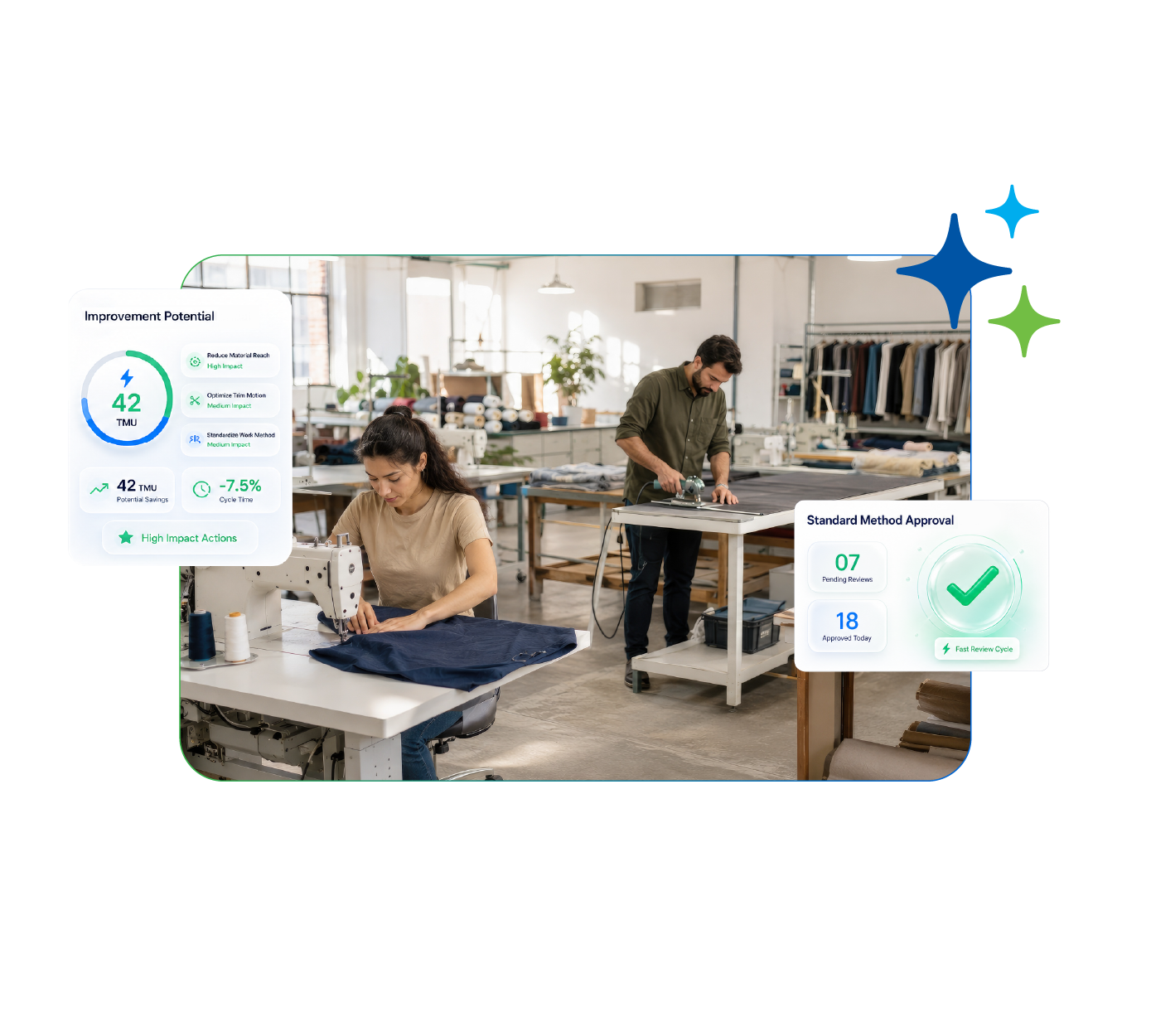
GSD RealMotion transforms disconnected shop floor data into actionable operational intelligence.
By combining AI-powered video motion analysis, sewing machine integration, trusted GSD standards and connected production insights, it helps manufacturers understand how work is actually performed, identifies performance gaps and prioritises the actions that deliver the greatest operational improvement.
RealMotion extends the trusted GSD standard onto the factory floor.
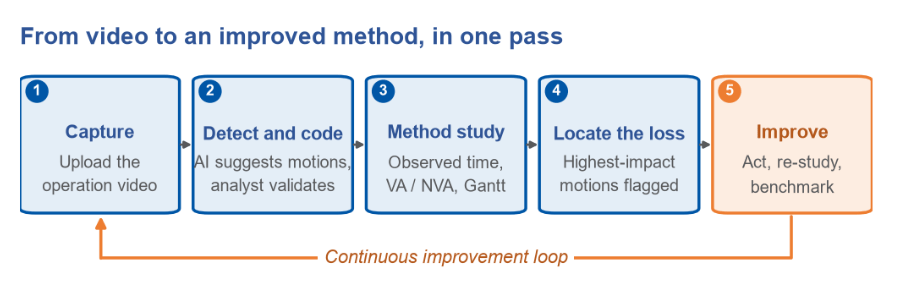

- See the real method, not the assumed one. GSD RealMotion reads the video on its own terms. It does not force the footage to match the codes the style was costed with, which would erase the very gap worth finding. It captures what the operator actually does, then compares.
- Turn a 45-minute stopwatch study into a 15-minute video-assisted one. And turn the eight-hour manual method analysis, the one nobody can afford today, into something that runs while the engineer reviews it.
- Locate the loss to the motion. Every motion is classified value-added, non-value-added or necessary, with observed time attached. The waste has a name, a duration and a position in the sequence.
- Know which variance you can act on. Compare any study against a previous or peer study, video against video, and GSDRealMotion separates variance that is actionable from variance inherent to the line. Engineers stop chasing differences they cannot change.
- Benchmark against the engineered standard, not just against yourselves. GSD RealMotion compares the observed method to the GSD standard held in GSDCost, so the gap is measured against engineered truth.
- Build an asset instead of a filing cabinet. Every study lands in a shared, GSD-coded library that any site can search and reuse. Method knowledge accumulates rather than leaving with the engineer who captured it.
- Feed the corrected method back into costing. Verified observed standards publish back to GSDCost under approval, so the next quote is built on what the floor actually does.










Every Motion Tells a Story.
GSD RealMotion Shows You What to Do Next.

Reduce study time to minutes and improve method accuracy

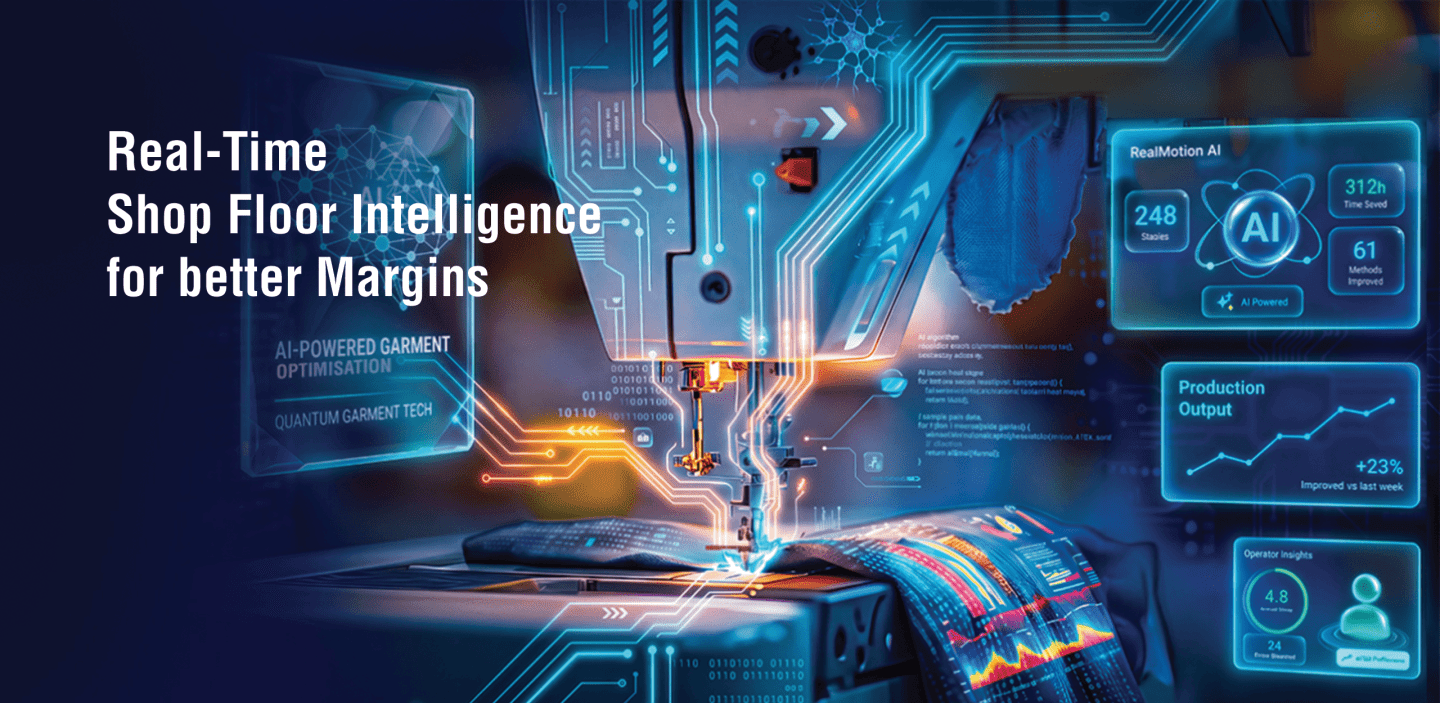
Gain real-time visibility into machine performance

Recover productivity within the shift

Improve costing accuracy and protect margins

Standardise best practices across lines and factories

Accelerate continuous improvement across every operation.
Frequently Asked Questions
-
What is GSD RealMotion?
GSD RealMotion is an AI-powered motion intelligence platform designed to analyse shop floor operations at a granular human motion level. It combines computer vision, production data, sewing motion detection and enables manufacturers to identify operational inefficiencies, quantify motion waste, and benchmark actual performance against engineered standards. By transforming raw shop floor activity into actionable insights, it supports continuous improvement and data-driven decision-making across production environments.
-
How does GSD RealMotion work?
GSD RealMotion captures production floor activity through video and applies advanced AI-based motion recognition to detect, classify, and measure operator movements. The platform maps observed motions against GSD motion codes and predetermined time standards, creating a detailed digital representation of the manufacturing method. Engineers can review identified motions, validate findings, and compare actual execution against target methods. This provides a faster and more objective alternative to manual work measurement studies.
-
What problems does GSD RealMotion solve?
Many manufacturers struggle with limited visibility into actual operator performance, inefficient work methods, and outdated manual time study processes. GSD RealMotion eliminates these challenges by providing objective, motion-level analysis that uncovers hidden non-value-added activities and process variation. It helps engineering teams identify bottlenecks, method inconsistencies, and productivity losses that may otherwise remain undetected. The result is improved operational control, higher efficiency, and more accurate manufacturing standards.
-
How is GSD RealMotion different from traditional stopwatch time studies?
Traditional stopwatch studies focus primarily on elapsed cycle time and rely heavily on manual observation, making them time-consuming and prone to human errors such as inconsistent observations, timing inaccuracies, sampling limitations, and manual data-entry errors that can impact study accuracy. GSD RealMotion uses artificial intelligence and video analysis to break down operations into individual motions and work elements. Each motion is categorised as efficient or non-efficient based on actual human motion patterns, providing significantly deeper visibility into operator performance. This enables manufacturers to identify root causes of productivity loss rather than simply measuring output time.
-
Can GSD RealMotion help improve garment costing accuracy?
Yes. Costing accuracy depends on the alignment between engineered standards and actual shop floor execution. GSD RealMotion validates manufacturing methods against GSD-based predetermined standards and identifies any deviations impacting Standard Minute Values (SMVs). Verified real-time observations can be incorporated into costing processes, ensuring production standards reflect actual operating conditions. This helps manufacturers improve quote accuracy, protect profit margins, and reduce commercial risk during order negotiations.
-
Does GSD RealMotion integrate with GSDCost?
Yes. GSD RealMotion is designed to work alongside GSDCost, creating a closed-loop methodology for work measurement and costing validation. Observed production methods can be benchmarked directly against standards developed within GSDCost, allowing engineering teams to measure variance and identify improvement opportunities in real-time. Approved AI Motion detection results can then be fed back into the costing environment to maintain accurate and up-to-date manufacturing standards. This strengthens consistency between planning, costing, and execution.
-
How does GSD RealMotion support continuous improvement?
GSD RealMotion establishes a structured continuous improvement framework by providing objective and repeatable performance measurements. The platform enables manufacturers to compare studies across operators, lines, factories, and production periods to identify recurring inefficiencies and best practices. Engineers can monitor improvement initiatives using quantitative data and validate the impact of operational changes. This promotes a culture of evidence-based decision-making and sustainable productivity improvement.
-
Can GSD RealMotion standardise best practices across factories?
Yes. GSD RealMotion creates a centralised repository of validated method studies that can be accessed across multiple production locations. Manufacturing teams can compare operational methods, identify high-performing processes, and deploy standardised best practices throughout the organisation. This reduces variation in execution and ensures consistency in engineering standards. The result is improved operational alignment across factories, suppliers, and production networks.
-
Who can benefit from using GSD RealMotion?
GSD RealMotion is valuable for industrial engineers, continuous improvement teams, production managers, operational excellence leaders, and factory executives. It supports users responsible for establishing labour standards, improving productivity, optimising production methods, and controlling manufacturing costs. Multi-site manufacturers can also use the solution to benchmark performance across facilities and drive standardised operational excellence. The platform delivers value at both strategic and shop floor levels.
-
Does GSD RealMotion provide real-time shop floor visibility?
GSD RealMotion provides near real-time operational shop floor visibility by combining video-derived motion intelligence with production and machine performance data. This enables manufacturers to identify emerging productivity issues and respond before they significantly impact output or efficiency. The platform delivers actionable insights into operational performance, process compliance, and labour effectiveness. Enhanced visibility supports faster decision-making and stronger production control.