

Calculate garment SMV through method-time-cost analysis
GSDCost
Industry standard solution for costing optimisation and method improvement
GSDCost is the international standard for establishing and optimising accurate method-time-cost benchmarks for sustainable garment cost optimisation and manufacturing excellence.
GSDCost supports a more collaborative, transparent and sustainable supply chain, in which brands and manufacturers establish and optimise ‘International Standard Time Benchmarks’ using standard motion codes and predetermined times. This use of a common language and standards supports accurate cost prediction, fact based negotiation, and a more efficient garment manufacturing process, while concurrently delivering on CSR commitments. GSDCost is proven to:

Optimise

Connect

Accelerate

Reinforce CSR
Proven and trusted












GSDCost helps you boost profits
Calculate garment SMV’s accurately with the trusted industry software for method, time and cost improvements. Increase your profits through enhanced collaboration and transparency across the supply chain with GSDCost.
Typical business benefits
5 %
Reduction in SMVs
5 %
Increase in productivity
10 %
Improvement in OTDP
“GSDCost helped us to boost and align our efficiency globally. We can now use more accurate information in our business, improving our sewing method and standardising the sewing process.”
General Manager,
PT. Sumber Bintang Rejeki

How it works
Scientific and objective methods analysis
GSDCost is a scientific and objective Methods Analysis process which creates a Method Standard to help establish and optimise ‘International Standard Time Benchmarks’ for all sewn products, using standard motion codes and predetermined times.
It establishes International Time Standards by applying the appropriate Predetermined Motion Codes to each step in the Method Standard.
These 39 Motion Codes, can be used as building blocks to create thousands of operations and features and unlimited product styles.
Key processes powered by GSDCost
-
 Pre-determined time-motion database
GSDCost’s core Pre-Determined Time-Motion Database harnesses the power of the scientific analysis of human motion in 39 Motion Codes, each with its associated International Standard Time or Standard Minute Value (SMV). These motion codes are used as building blocks and support the creation 1,000s of operations, features and unlimited product styles, allowing businesses to create their own standard Methods Database based on accurate, efficient and sustainable manufacturing methods.
-
 Method analysis and standard
The GSDCost solution is used by production and industrial engineers, trained and as Licensed GSDCost Practitioners, to complete scientific and objective Method Analysis of manufacturing operations to create an accurate and consistent Method Standard for costing and production. GSDCost allows sewn product manufacturers to establish and optimise ‘International Standard Time Benchmarks’ using standard motion codes and predetermined times for each step in the manufacturing method.
-
 Method improvement
GSDCost is used by trained and Licensed GSDCost Practitioners to analyse all operations in the factory establishing accurate and consistent times and assembling a complete Style analysis for Costing and Production. This scientific process then creates an accurate and consistent Methods Database for the business.
Trained Practitioners can use GSDCost as a Method Improvement tool to investigate the detail of the analysis, and to identify opportunities for improvement which, once approved, are saved as new updated versions of the analysis.
Method and time standardisation provides strong foundations for optimising each operation in the production line to improve the current method and boost overall productivity. Standardised garment construction methods also improve consistency of product quality, resulting in fewer defects.
-
 Costing optimisation
Scientific costing using international standard motion codes and pre-determined times support open, fact-based approach to design for value and manufacturing, with accurate cost prediction and win-win pricing negotiation.
-
 Optimised planning and line balancing
GSDCost supports the accurate SMV values which are essential for accurate capacity planning and line balancing, supporting a smoother production flow, increased efficiency and improved on time delivery performance.
With accurate and optimised method standards, manufacturers with GSDCost are able to plan with more confidence, shortening ‘learning curves’ for new styles and achieving a smoother production flow, which is increasingly critical to driving efficiency and on time delivery in the face of smaller production runs.
-
Fair wage tool
The globalised fair wage tool brings a new level of visibility and transparency to discussions on time, cost and compliance. Combining the international standard minute value (SMV) to produce any given style, with detailed factory efficiencies, contracted hours and the agreed wage rate, allows brands and manufacturers to quickly agree the wage allowance for any given order, in any factory in the world, and benchmark this against international fair wage standards. This ensures high standards of Corporate and Social Responsibility (CSR) and Ethical Compliance for brand and manufacturer.
-
 Global standard data libraries
Global standard data libraries developed for specific product types (e.g. intimates, jersey knit leisure and athleisure), come pre-built with standardised components and typical operations used in the manufacture of these product types, providing businesses with the opportunity to leverage established industry standards to accelerate the process of building their own Methods Standards database.
-
 Digital feedback loop
GSDCost comes with a native integration into the Res.Q shop floor suite of solutions, allowing the solutions to work together seamlessly to provide a digital feedback loop of actual versus standard minute value at the operation level, highlighting variances and opportunities for proactive, continuous improvement.
What our customers say
Delivering real results




Frequently Asked Questions
-
How does GSDCost calculate SMV for garment manufacturing?
GSDCost calculates SMV (Standard Minute Value) by breaking each sewing operation into individual human motions and assigning one of 39 standardised motion codes to each movement. Each motion code carries a fixed, internationally recognised time value. The software sums these times to produce a precise SMV for every operation. These SMVs are assembled into a complete style analysis, forming a Method Standard used for garment costing, line balancing, and production planning. The process is carried out by trained, licensed GSDCost Practitioners.
-
How does GSDCost support fair wage calculation and CSR compliance?
GSDCost includes a built-in Fair Wage Tool that calculates the wage allowance for any garment order in any factory worldwide. It combines the style’s SMV with factory efficiency rates, contracted hours, and the agreed wage rate to produce a transparent, auditable wage figure, benchmarked against international fair wage standards. Both brands and manufacturers use this tool to substantiate CSR commitments, satisfy ethical compliance audits, and reduce disputes over labour cost in commercial negotiations. The fair wage data itself is sourced from the Fair Wage Network’s global living wage benchmarks.
-
What is the difference between GSDCost and a traditional stopwatch time study?
A traditional stopwatch time study relies on an observer timing a worker and applying a subjective performance rating, which makes results inconsistent, disputable, and dependent on individual bias. GSDCost instead uses a Predetermined Motion Time System (PMTS), assigning fixed international time values to 39 defined motion codes regardless of who performs the study. The result is objective, repeatable, and mutually acceptable to both buyers and suppliers, forming the basis for fact-based costing negotiations instead of estimate-driven ones.
-
Who are the typical users of GSDCost?
GSDCost is used by two groups. Garment manufacturers, specifically production engineers and industrial engineers trained as Licensed GSDCost Practitioners, use it to build a Methods Database, analyse and improve operations, and generate accurate SMVs for costing and planning. Apparel brands and buyers use it to validate supplier costs, conduct design-for-value analysis, and negotiate CM (cost-to-make) prices transparently. Brands and manufacturers using GSDCost include Adidas, VF Corporation, Victoria’s Secret, Target, Hirdaramani, Pacific Jeans, and Hansae.
-
How does GSDCost motion analysis improve operator efficiency in garment factories?
GSDCost improves operator efficiency by replacing guesswork with a documented, optimal sequence of motions for every operation. Licensed Practitioners use the 39 motion codes to analyse how an operation is currently performed, identify wasted or redundant movements, and propose a more efficient method. Once approved, that method becomes the new Method Standard, which is then used to retrain operators consistently. Coats Digital’s own results show this translates into measurable gains: Ansell Textile Lanka saw a 7% productivity improvement in its Body Protection division after standardising methods this way, and VTL Group raised line output by 10% after the same process across 50 sewing lines.
-
Can GSDCost help standardise SMVs across multiple factories?
Yes, standardising SMVs across multiple factories is one of GSDCost’s core use cases, since every factory using the platform applies the same 39 motion codes and the same fixed international time values, regardless of location, operator, or who performs the analysis. This removes the variation that comes from each factory keeping its own informal time studies. Suzhou Tianyuan Garments is a documented example: before GSDCost, the company’s SMV calculations varied by up to 30% across its own production lines because they were based on individual engineers’ experience; after implementation, SMV calculation accuracy reached 98% company-wide. Ansell Textile Lanka used the same standardisation to scale from 36 manually-tracked styles to 150 styles with consistent, comparable SMVs
-
How does GSDCost improve line efficiency at the time of production?
GSDCost improves line efficiency by giving planners accurate, consistent SMVs to balance workload across a sewing line before production starts, rather than discovering bottlenecks after the line is already running. Because every operation’s time is based on fixed motion codes rather than estimates, planners can assign work more evenly, reducing idle time at some stations and overload at others. This directly supports On-Time Delivery Performance (OTDP). Coats Digital reports a typical 10% OTDP improvement from customers using GSDCost for planning, and individual results have gone further: VTL Group’s 10% output increase and Ansell’s 7% productivity gain both stemmed from this kind of line-level standardisation.
-
Can GSDCost integrate with ERP, PLM, and other manufacturing systems?
GSDCost is built with integration in mind: it has a native, real-time integration with Coats Digital’s own Res. Q shop-floor suite, providing a live feedback loop comparing actual versus standard minute values at the operation level. GSDCost’s SaaS architecture hosted on Microsoft Azure is also designed to feed SMV and cost outputs into customers’ wider ERP and PLM systems for downstream planning; Fakir Fashion, a 300,000-garment-per-day Bangladeshi manufacturer, is a documented example currently integrating GSDCost with its existing ERP to build a centralised digital ecosystem. Coats Digital’s newer AI costing tool, GSDQuest, is also planned to add direct API integration into PLM, ERP, and costing workflows in a future release.
-
How does GSDCost support supplier negotiations and apparel sourcing?
GSDCost supports supplier negotiations by giving brands and manufacturers a shared, objective SMV for any given style, so cost-to-make (CM) discussions are based on the same fixed, internationally recognised data rather than competing estimates from either side. Because the motion codes and time values are fixed and identical everywhere, a brand can validate a supplier’s quoted cost directly instead of negotiating from a position of uncertainty. This is also why GSDCost underpins design-for-value analysis during sourcing: brands can see exactly how a design change affects SMV and cost before committing to a supplier or style.
-
How do apparel brands benchmark SMVs across suppliers?
Apparel brands benchmark SMVs across suppliers by requiring or recommending a shared predetermined motion time system, most commonly GSD via GSDCost, so that every supplier’s quoted SMV for a given style is calculated using the same fixed motion codes and time values. This lets a brand’s own sourcing or industrial engineering team independently recalculate a supplier’s SMV and check it against the quote, rather than relying on the supplier’s internal (and potentially inconsistent) timing methods. Several major brands, including Adidas, VF Corporation, and Victoria’s Secret, work with GSDCost-certified suppliers specifically to make this kind of cross-supplier benchmarking possible.
Customer testimonials
Americas

#MethodTimeCostOptimisation
Elcatex Group adopts GSDCost to optimise garment costing
The vertically-integrated manufacturer from Honduras chose GSDCost to quantify and optimise manufacturing methods and garment costing, as a part of…

Americas

#MethodTimeCostOptimisation
Industrias Manufactureras MyR standardise method and cost
Mexico-based garment manufacturer to utilise GSDCost, to drive costing optimisation, manufacturing excellence and business profitability.

Europe, Middle East, and Africa

#MethodTimeCostOptimisation
Egyptian knitwear powerhouse, DICE, reduces its core style SMV by 11% in initial implementation phase of GSDCost
Dice Sports & Casual Wear also gained a 16% increase in production line efficiencies during its GSDCost trial

South East Asia

#MethodTimeCostOptimisation
Leading fashion apparel manufacturer, Shanghai Jiale, reduces its SMVs by over 30% with GSDCost
Following the success released at its Shanghai facility, Jiale Group has begun a GSDCost solution roll-out across its production base…

South East Asia

#MethodTimeCostOptimisation
Nobland International improves productivity by 13% with GSDCost
GSDCost has enabled Nobland to set realistic production goals based on accurate SMVs, resulting in increased productivity and seamless CM…

Americas
#MethodTimeCostOptimisation
RA Intertrading adopts GSDCost for accurate method standard
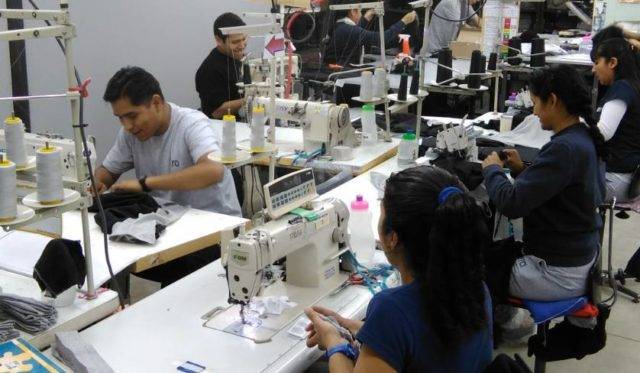
Coats Digital’s GSDCost enables RA Intertrading to create accurate method standards to optimise workforce processes to meet growing demand
