Best ERP Integration Options for Indian Garment Factories (2026 Guide)
by Kunal Kapur
 9
Mins Read
9
Mins Read
- Key Takeaways
- The Quote Arrives as a Single Number
- Why a Supplier Quote Is Never Just a Price
- Why “just send me a breakdown” is not enough
- What “Accurate” Actually Means
- Why labour is the variable that decides the quote
- The Independent Anchor: Standard Minute Value
- SMV and SAM: same measure, different label
- Predetermined motion time systems vs stopwatch time study
- Building the Cost Breakdown Before You Order
- Reading the Gap Between Your Number and Theirs
- When a higher quote is the better deal
- Separating fair-wage cost from inflation
- Red flags in a supplier breakdown
- Comparing Breakdowns Fairly Across Multiple Suppliers
- Issue one Bill of Labour and lock the SMVs
- Build vs Buy: Do You Need Software for This?
- What a spreadsheet and a trained partner can do
- What breaks at scale
- What a costing platform adds
- Walk In With Your Own Number
- Frequently Asked Questions
Key Takeaways
- Enterprise resource planning (ERP) integration for Indian garment factories works best when a dedicated planning layer sits between the ERP and the shop floor.
- No single ERP covers planning, costing, product development and shop-floor execution. Integration means connecting specialist tools, not buying one system.
- Madura Garments Exports integrated FastReactPlan with SAP to remove duplicate data entry and improve data integrity between departments.
- India’s export mix is being redrawn. UK duties on apparel fell to zero in July 2026, while US Section 301 duties carry no expiry date.
- Preferential trade now demands rules-of-origin evidence. Your systems must produce documentation, not just invoices.
- Fabric left with a job worker beyond one year becomes a deemed supply, creating a tax and interest liability the ERP should prevent.
- Goods and Services Tax (GST) 2.0 taxes garments at 5% up to ₹2,500 per piece and 18% above, with man-made fibre and yarn now at 5%.
- The right stack depends on scale, export orientation and existing IT investment. There is no universal answer.
On 15 July 2026, the India–UK Comprehensive Economic and Trade Agreement (CETA) came into force, removing the UK’s 12% import duty on Indian apparel overnight. Nine days later, on 24 July, the temporary Section 122 surcharge on US imports lapsed, and the US Trade Representative replaced it the same hour with tariffs arising from Section 301 forced-labour investigations covering roughly 60 economies.
For a Tiruppur or Bengaluru export house, those two events point in opposite directions and both land on the same systems. One opens a market that suddenly requires rules-of-origin evidence to claim preference. The other locks in a duty with no sunset clause, on the market that still takes the largest share of Indian garment exports.
ERP integration for Indian garment factories is the practice of connecting an enterprise system that holds commercial, material and financial records to the specialist tools that actually run production planning, costing, product development and shop-floor execution, so each does the job it was designed for and data moves between them without re-keying. It is not a synonym for buying a bigger ERP.
That distinction matters because of where the money leaks. Ask a production manager what the ERP does, and you will hear the same answer: it holds the orders, the material master and the invoices. Ask where the production plan lives, and nine times out of ten the answer is a spreadsheet.
What changed in 2026, precisely
India sits in the lower Section 301 band at 10%, one of seventeen economies at that rate. So do its main competitors: Bangladesh, Cambodia, Pakistan, Sri Lanka and Indonesia are all on 10% as well, so the headline rate hands India no relative advantage. The real gap is narrower and easy to miss. Bangladesh, Cambodia, Indonesia and Malaysia also received textile and apparel tariff-rate quotas (TRQs), targeted for 1 September 2026, that allow a defined volume of their garments to enter the US free of the Section 301 duty in return for importing US cotton and textile inputs. India received no such quota. Indian textile bodies have raised that exclusion as a competitive concern, and the duty itself carries no expiry date.
The pressure shows in the numbers. The Apparel Export Promotion Council (AEPC) reported ready-made garment (RMG) exports of USD 13,129.1 million for April to January 2025-26, up 1.6% year on year, with January 2026 down 3.8%. Chairman Dr A Sakthivel described exporters absorbing cost pressure with discounts of up to 20% during the high-tariff window and still losing orders to competing destinations.
The UK opening is real but conditional. Duty-free access is claimed, not granted automatically, and it requires origin documentation traceable to fabric and often yarn. India–EU negotiations concluded in January 2026, with legal revision and formal signature still to follow, extending the same requirement across a far larger market. A factory that cannot evidence origin from its own records will watch the tariff advantage evaporate at the buyer’s compliance desk.
The four integration failures that cost Indian factories money
- An ERP that stores the order but cannot schedule it. It tells you what is due and whether fabric exists, not which line runs it on which day, at what efficiency, against which critical-path milestone.
- Double data entry. Orders keyed into the ERP, keyed again into a planning spreadsheet, then reconciled by hand when the two disagree. The reconciliation becomes the job, and planning is what gets squeezed.
- Job work managed outside the system. Challans on paper, material returns matched by memory, and cost per piece per contractor never properly known.
- GST mapped incorrectly at invoice level. Fabric, yarn, the two garment price bands and job-work services sit on different rates. A system that maps them wrongly generates notices, not just errors.
How We Selected These 10 Integration Options
This is a curated set across four categories, production planning, enterprise ERP, product lifecycle management (PLM) and manufacturing execution systems (MES). It is not a ranked league table. The order reflects how directly each option addresses the core integration gap in Indian RMG operations: planning discipline layered on top of ERP data. That is why a planning specialist leads rather than an ERP.
- Evidence of Indian RMG adoption. Named Indian customer references or verifiable regional deployments, not generic “we serve manufacturing” claims.
- India-relevant functionality. GST 2.0-compliant billing and e-invoicing, job-work and cut-make-trim (CMT) challan tracking, size-colour matrix stock-keeping unit (SKU) management, capacity planning based on standard minute values (SMVs), multi-buyer time-and-action (T&A) calendars, and export documentation.
- Integration readiness. Documented data-interface capability with planning tools, local implementation support in Tiruppur, Bengaluru or the National Capital Region (NCR), and a deployment model suited to connectivity-constrained sites.
- Scale fit. Small (under 500 operators), mid (500 to 3,000), large or group (3,000 and above).
The 10 ERP Integration Options At A Glance
| Tool/option | Category | Deployment | Best factory size | India-ready | RMG integration strength |
| FastReactPlan (Coats Digital) | Production planning and control | Cloud / on-prem | Mid and large export factories | ✓ Local presence | Interfaces with ERP, PLM and shop-floor systems; SAP integration documented at Madura Garments |
| SAP S/4HANA for Fashion and Vertical Business | Enterprise ERP | Cloud / on-prem | Large vertically integrated groups | ✓ | Documented Indian precedent integrating with FastReactPlan for order and style data flow |
| Microsoft Dynamics 365 Business Central | Mid-enterprise ERP | Cloud / on-prem | Mid-to-large multi-entity factories | ◑ Via partner network | Native Power BI reporting; apparel depth via ISV partners for style, size, colour and T&A |
| Oracle NetSuite | Cloud ERP | Cloud | Mid-to-large exporters | ◑ Via partner | Style × size × colour matrix inventory with traceability for EU, UK and US buyer compliance |
| WFX | Cloud apparel ERP + PLM + MES | Cloud | Mid-to-large multi-buyer exporters | ✓ Active in South Asia | T&A calendar and PLM on one platform; published NetSuite connector |
| VisionPLM (Coats Digital) | PLM | Cloud | Design-led exporters and buying houses | ◑ Via integration | Connects product development to production execution alongside an ERP or planning tool |
| Zubizi | Cloud ERP (India-origin) | Cloud | SMB and startups | ✓ Built for Indian workflows | HSN masters with threshold-based GST switching; size-colour SKU matrix |
| Apna ERP / Bsquare Solutions | India-origin garment ERP | Cloud / on-prem | SMB to mid-size | ✓ India-headquartered | Job-work challan generation and reconciliation under CGST Section 143; style BOM; GST billing |
| Stitch-MES | Shop-floor MES | Cloud | SMB to mid-size, CMT factories | ✓ India-based vendor | Machine and operator-level real-time capture; complements rather than replaces ERP and planning |
| ERPNext (Frappe) | Open-source ERP | Cloud / self-hosted | Small factories and startups | ✓ India Compliance app | Native subcontracting with ITC-04 support; lowest-cost route to structured BOM and inventory |
How to read this. India-ready separates native local capability (✓) from tools that need a third-party partner to reach the same place (◑). The final column names the single integration capability that matters most in an Indian export context, not a full feature list. HSN is the Harmonised System of Nomenclature; ISV is an independent software vendor; SMB is a small and mid-size business; BOM is a bill of materials.
The 10 Integration Options, Reviewed
1. Coats Digital FastReactPlan: production planning and control
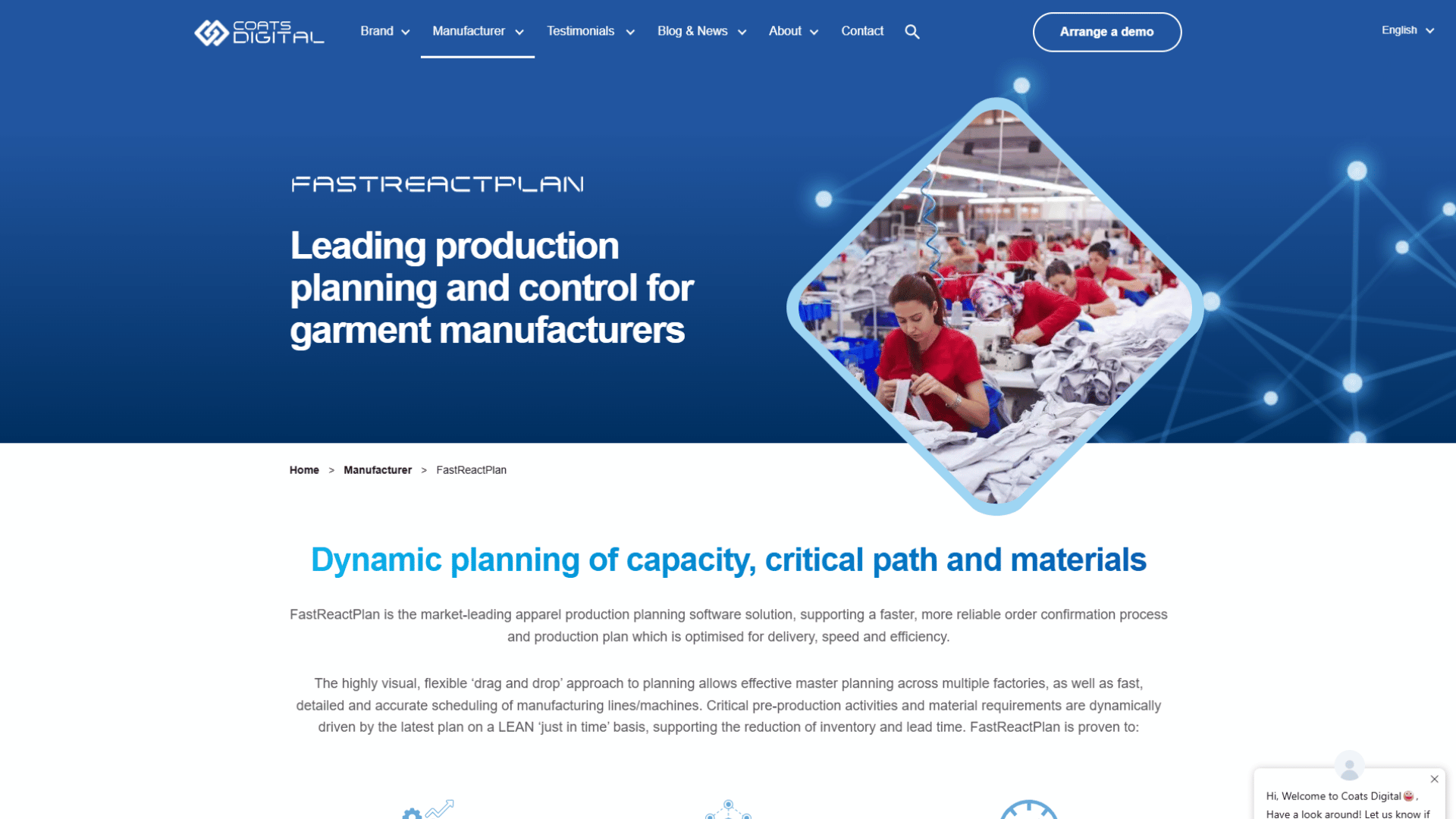
The planning layer that connects into a factory’s existing ERP rather than replacing it.
Capabilities: drag-and-drop visual planning across multiple lines and factories with a master control-tower view; line and machine-level scheduling built on standard minutes, efficiency profiles and start-up curves; material requirements driven on a LEAN just-in-time pull from the live sewing plan; a pre-production critical path with dynamic target dates and colour-coded alerts; Power BI KPI dashboards; and an AI Analytics add-on with an “Ask Coats Digital” assistant.
Integration is deliberately pragmatic. Data is exchanged with ERP, PLM and shop-floor systems through an intermediary shared file system on a timed or triggered basis, letting the receiving system run its own integrity checks. Unfashionable, but it survives contact with factories where the ERP roadmap keeps moving.
Evidence: Coats Digital states 500+ clients across 40+ countries, 2,000+ factories planned on FastReactPlan, typical return on investment (ROI) under 12 months, and customer-reported benefits of 3–10% productivity gain, 10–30% on-time delivery performance (OTDP) improvement and 10–30% lead-time reduction. In India, Madura Garments Exports, an Aditya Birla Group subsidiary and one of India’s largest shirt manufacturers, implemented FastReactPlan and then integrated it with SAP, which removed duplication of data entry and improved data integrity between departments. Deputy Chief Operating Officer R. Swaminathan reported that, in the shirts unit from FY2009 to FY2011, the factory produced 34.5% more output with 25.5% more machines and labour: a 7.1% efficiency gain over two years. These are the customer’s own reported historical results, not a guaranteed outcome.
Best for: mid-size and large Indian exporters running, or considering, an ERP that needs a dedicated planning layer above it.
Consideration: a planning specialist, not a financial or commercial ERP. Pair it with one for order-to-shipment visibility.
2. SAP S/4HANA for Fashion and Vertical Business: enterprise ERP
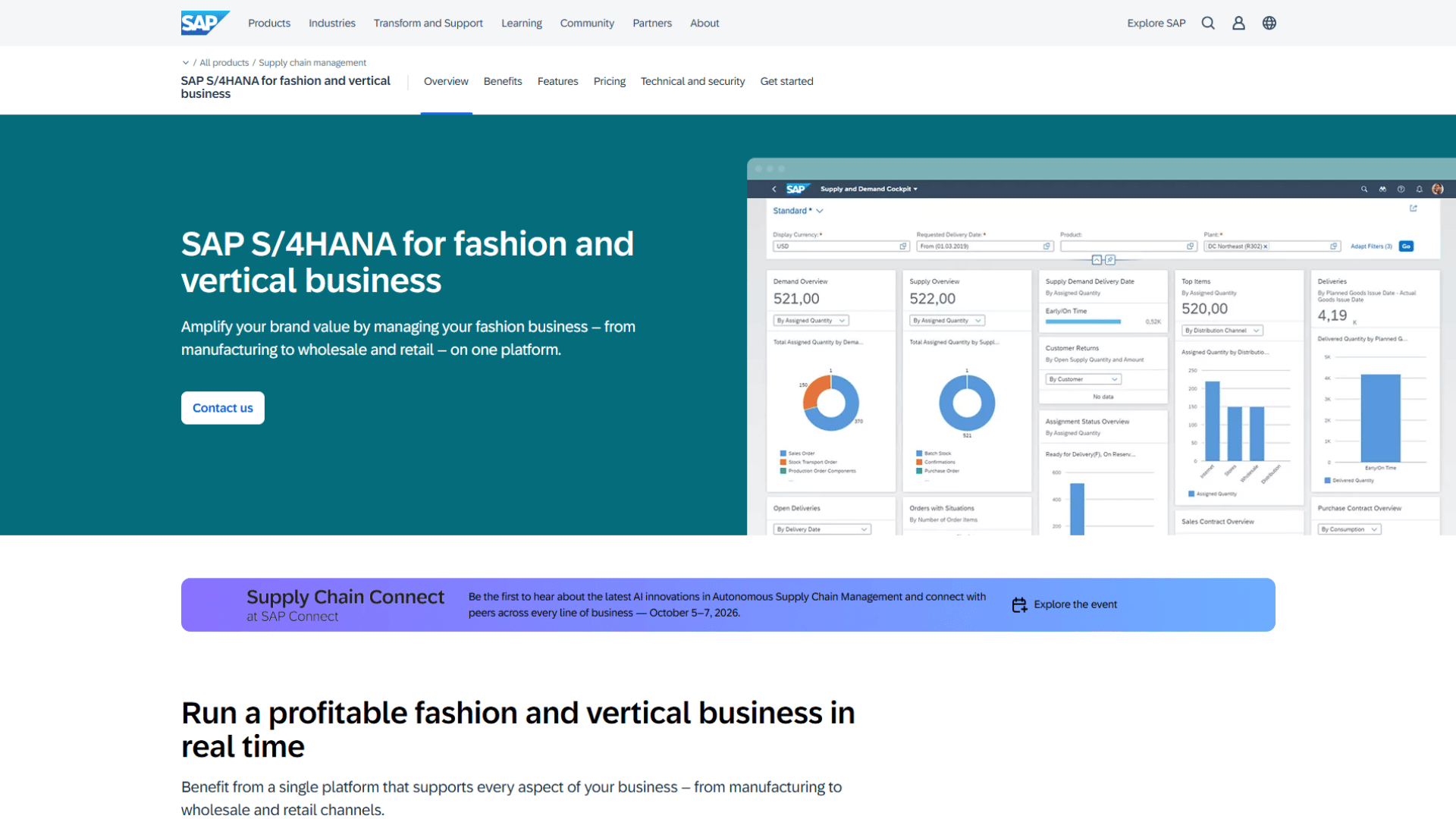
The group system for large, vertically integrated businesses spanning yarn, fabric, garment and export.
Capabilities: financial consolidation across entities, multi-plant visibility, audit-grade traceability, compliance and sustainability reporting, and warehouse and logistics integration, with stock segmentation and supply assignment that the older Apparel and Footwear Solution (AFS) lacked.
India and RMG relevance: there is a timing dimension most ERP comparisons miss. SAP AFS reaches end of support in 2027, as does SAP Fashion Management. Any Indian group still on AFS is on a clock, and a migration is the cheapest moment to fix the planning-layer integration rather than rebuilding interfaces twice.
Best for: large vertically integrated groups with spinning, fabric and garment divisions under one ownership.
Consideration: cost and complexity are substantial, and a major systems-integrator partner is effectively mandatory. Not a realistic fit for mid-size or owner-managed factories.
The group system for large, vertically integrated businesses spanning yarn, fabric, garment and export.
Capabilities: financial consolidation across entities, multi-plant visibility, audit-grade traceability, compliance and sustainability reporting, and warehouse and logistics integration, with stock segmentation and supply assignment that the older Apparel and Footwear Solution (AFS) lacked.
India and RMG relevance: there is a timing dimension most ERP comparisons miss. SAP AFS reaches end of support in 2027, as does SAP Fashion Management. Any Indian group still on AFS is on a clock, and a migration is the cheapest moment to fix the planning-layer integration rather than rebuilding interfaces twice.
Best for: large vertically integrated groups with spinning, fabric and garment divisions under one ownership.
Consideration: cost and complexity are substantial, and a major systems-integrator partner is effectively mandatory. Not a realistic fit for mid-size or owner-managed factories.
3. Microsoft Dynamics 365 Business Central mid-enterprise ERP
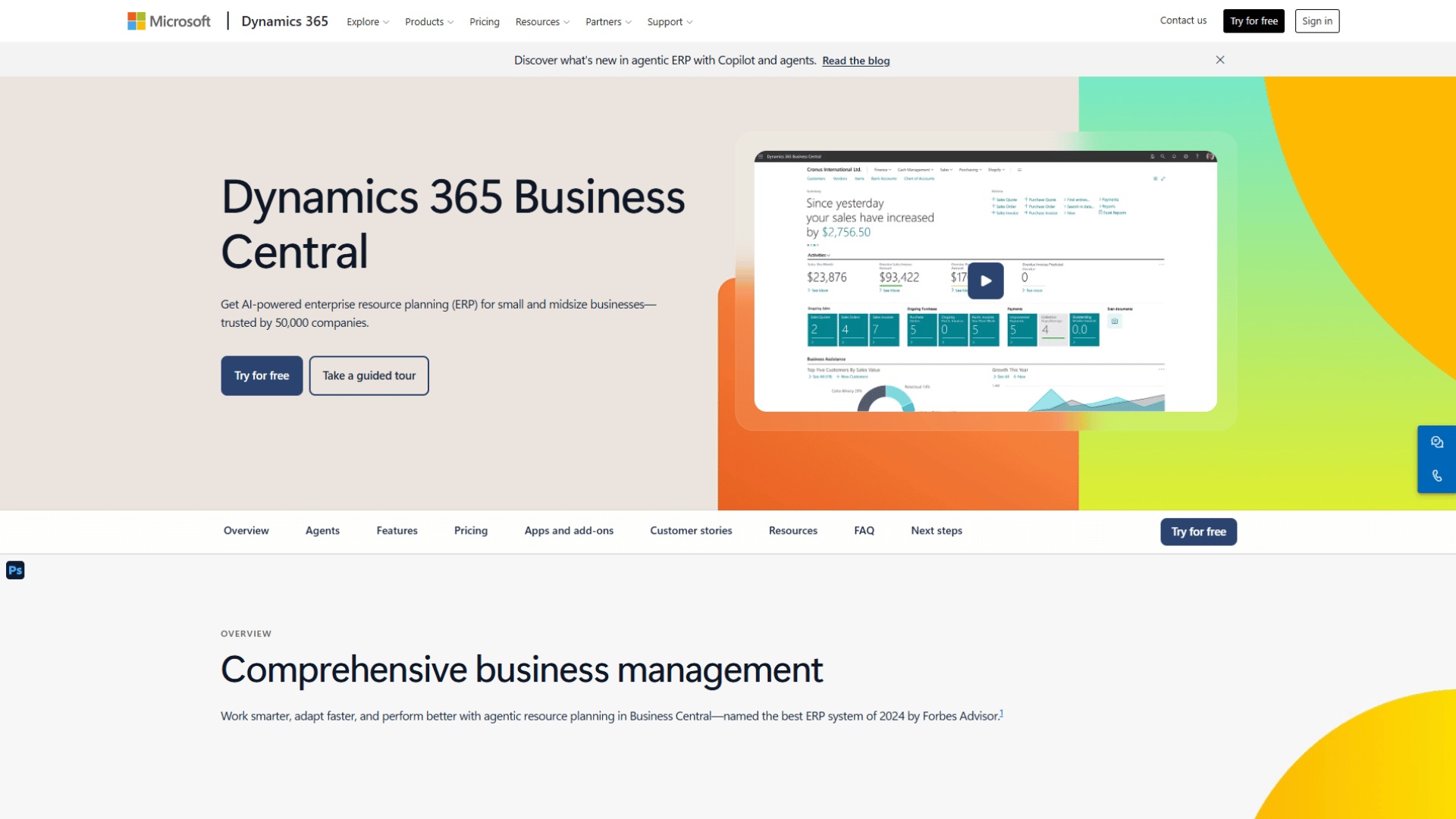
The credible step up for Indian groups outgrowing a local ERP but not ready for a full S/4HANA programme.
Capabilities: unified financials, production orders, multi-entity and multi-currency consolidation, native Power BI dashboards, and apparel configuration through ISV partners.
India and RMG relevance: Microsoft’s partner network gives NCR and Bengaluru groups local implementation options, and the Power BI layer pairs with FastReactPlan’s own Power BI KPI dashboards, giving the board one reporting surface rather than two that disagree.
Best for: mid-to-large factories and multi-entity groups wanting a globally recognised ERP with local support.
Consideration: out-of-the-box apparel depth is thin. SMV-based capacity planning and line-level scheduling are not native and need either an ISV add-on or a dedicated planning tool.
4. Oracle NetSuite cloud ERP
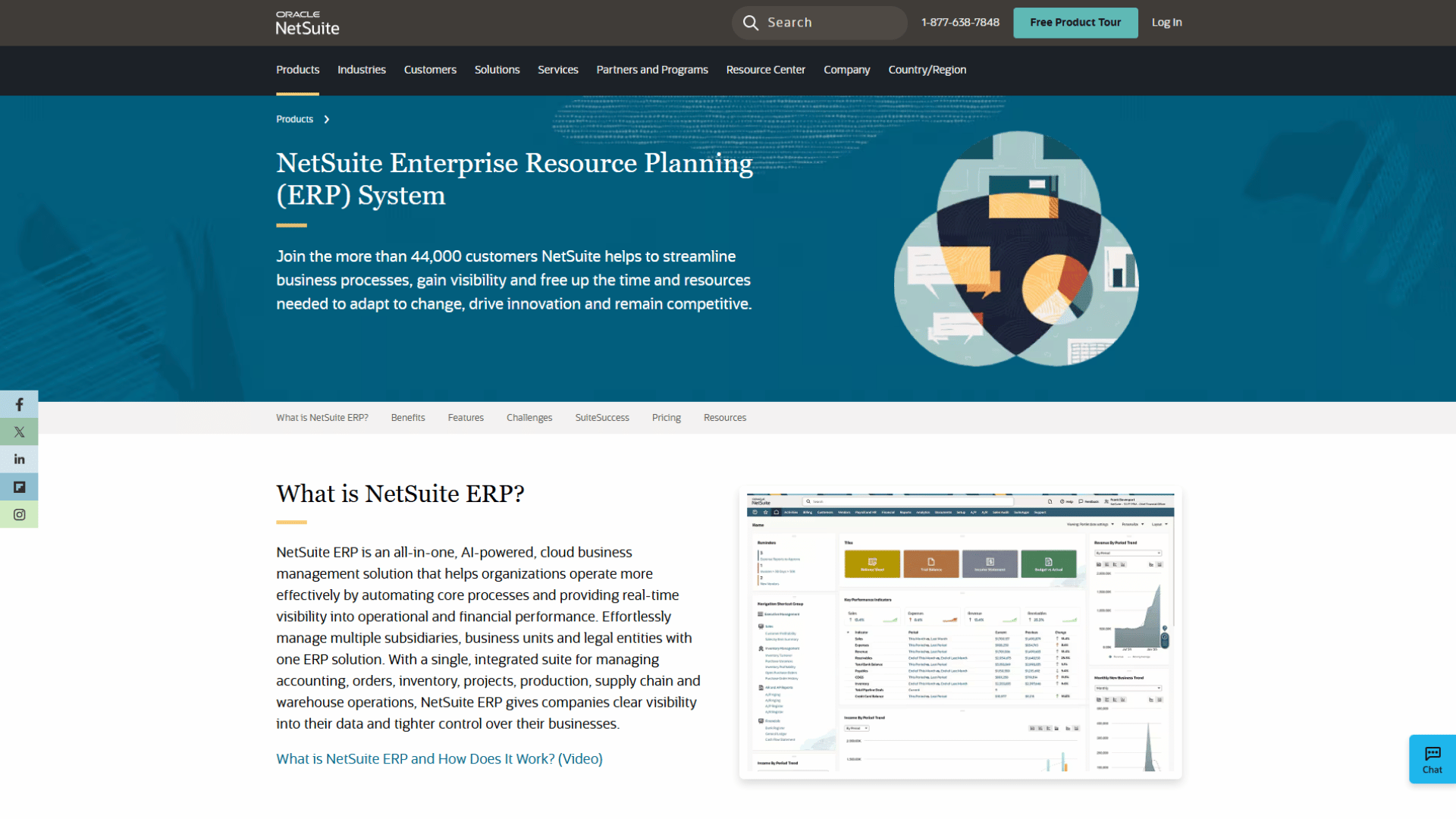
Cloud ERP with native matrix inventory, suited to exporters managing wide SKU matrices for EU, UK and US buyers.
Capabilities: style × size × colour matrix inventory, raw-material-to-shipment traceability, multi-currency financial visibility, and seasonal demand planning.
India and RMG relevance: traceability has stopped being a buyer nicety. Section 301 duties rest explicitly on forced-labour findings, and CETA preference claims require origin evidence reaching back to fabric and often yarn. A system that can reconstruct chain of custody from its own records now does two jobs: defending a compliance challenge and claiming a tariff concession.
Best for: mid-to-large exporters supplying EU, UK and US brands where traceability is contractual.
Consideration: apparel functionality is configured rather than native, and the India-based NetSuite partner pool is smaller than for SAP or local ERPs. Budget for a specialist implementation partner.
5. WFX cloud apparel ERP with built-in PLM
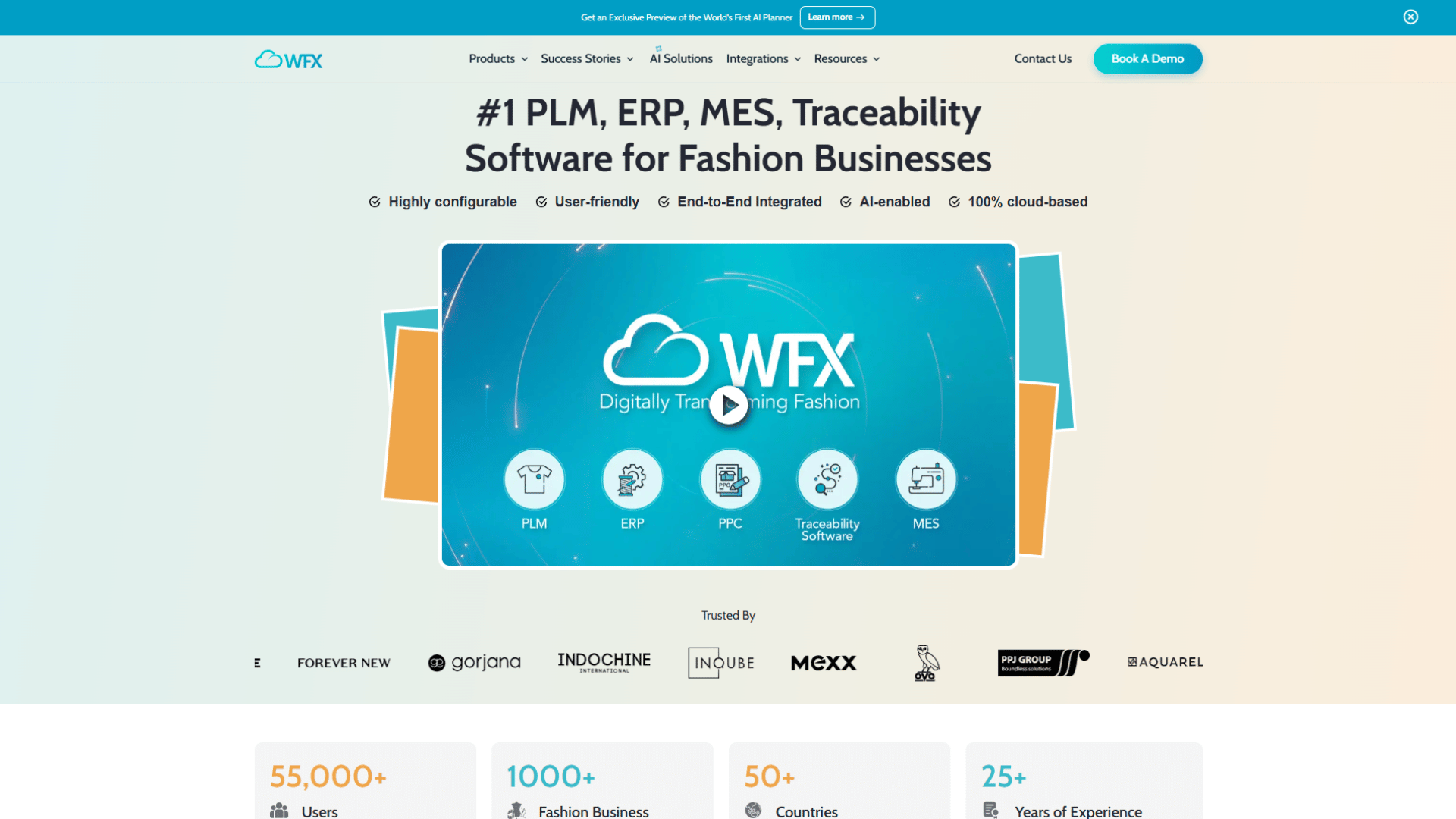
An end-to-end cloud suite covering PLM, ERP and MES, with a long-standing presence in South Asian apparel.
Capabilities: T&A calendar, order processing, style and sampling workflow, quality control, dispatch, a Smart Factory MES module, and a published NetSuite connector for the PLM layer. WFX reports serving over 600 businesses across 50+ countries, a figure that is vendor-stated and not independently audited.
India and RMG relevance: the T&A calendar handles the long fabric-sourcing lead times common in Indian woven programmes, and the front-end PLM suits the daily buyer collaboration that Bengaluru and NCR export houses run.
Best for: mid-to-large exporters running multi-buyer, multi-style programmes who want cloud ERP with integrated product development.
Consideration: stronger on front-end style management than on constraint-based factory scheduling. Pair with a dedicated planning tool for line-level control.
6. VisionPLM (Coats Digital) PLM
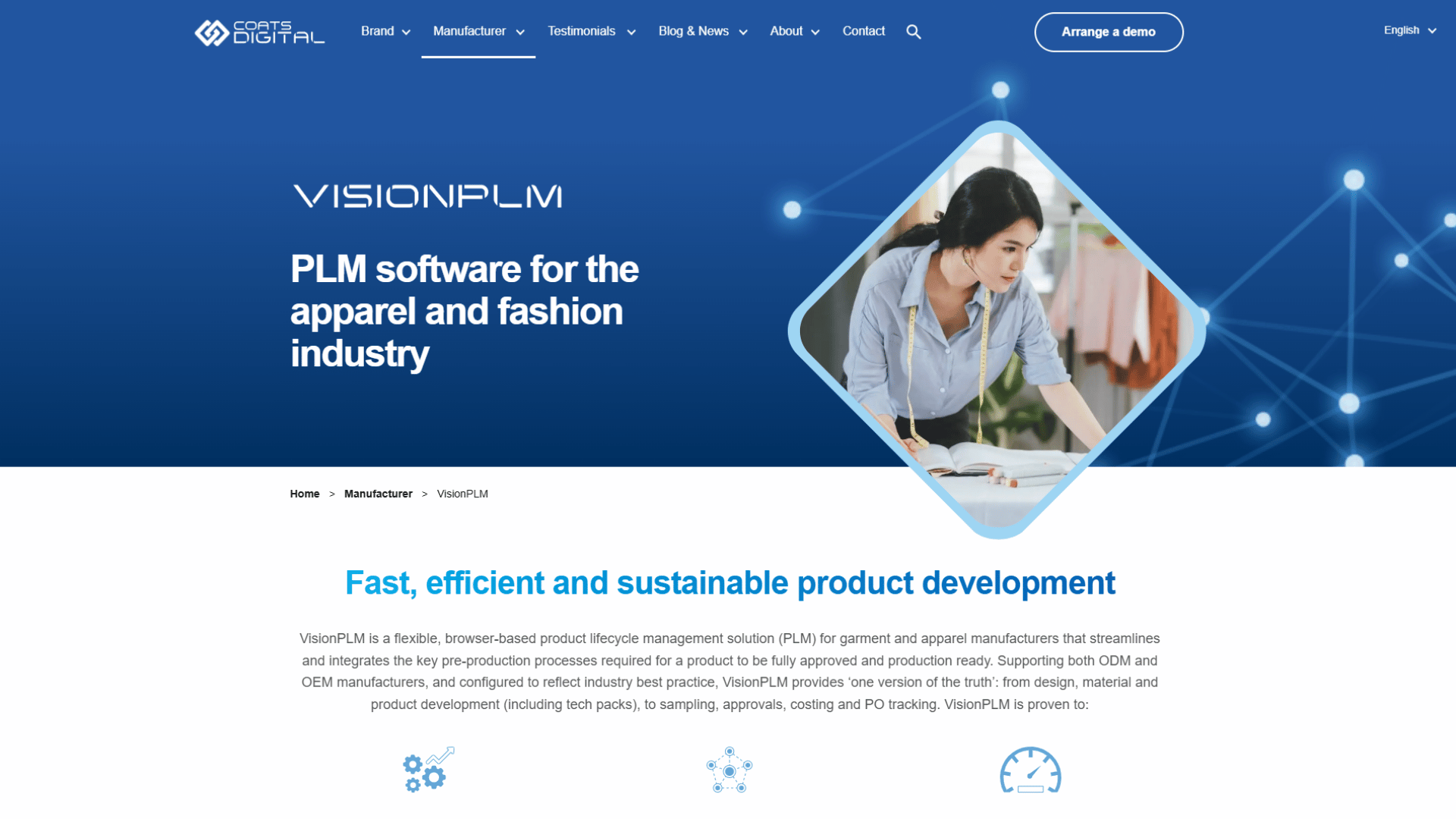
Browser-based apparel PLM linking product development through sourcing into production.
Capabilities: seasonal calendar management, material and trim tracking, costing approvals, supplier-performance visibility, and integration into downstream execution systems.
India and RMG relevance: development-pipeline fabric sourcing, fit approval and bulk sign-off are where Indian export houses quietly lose weeks. A PLM layer gives buying offices spanning several suppliers one place to see where each style actually is, rather than three inboxes and a shared drive.
Best for: design-forward exporters with complex development cycles, and buying houses managing multiple factories.
Consideration: a development tool, not a production-execution system. It needs ERP or planning integration to connect development calendars to floor scheduling.
7. Zubizi India-origin cloud ERP
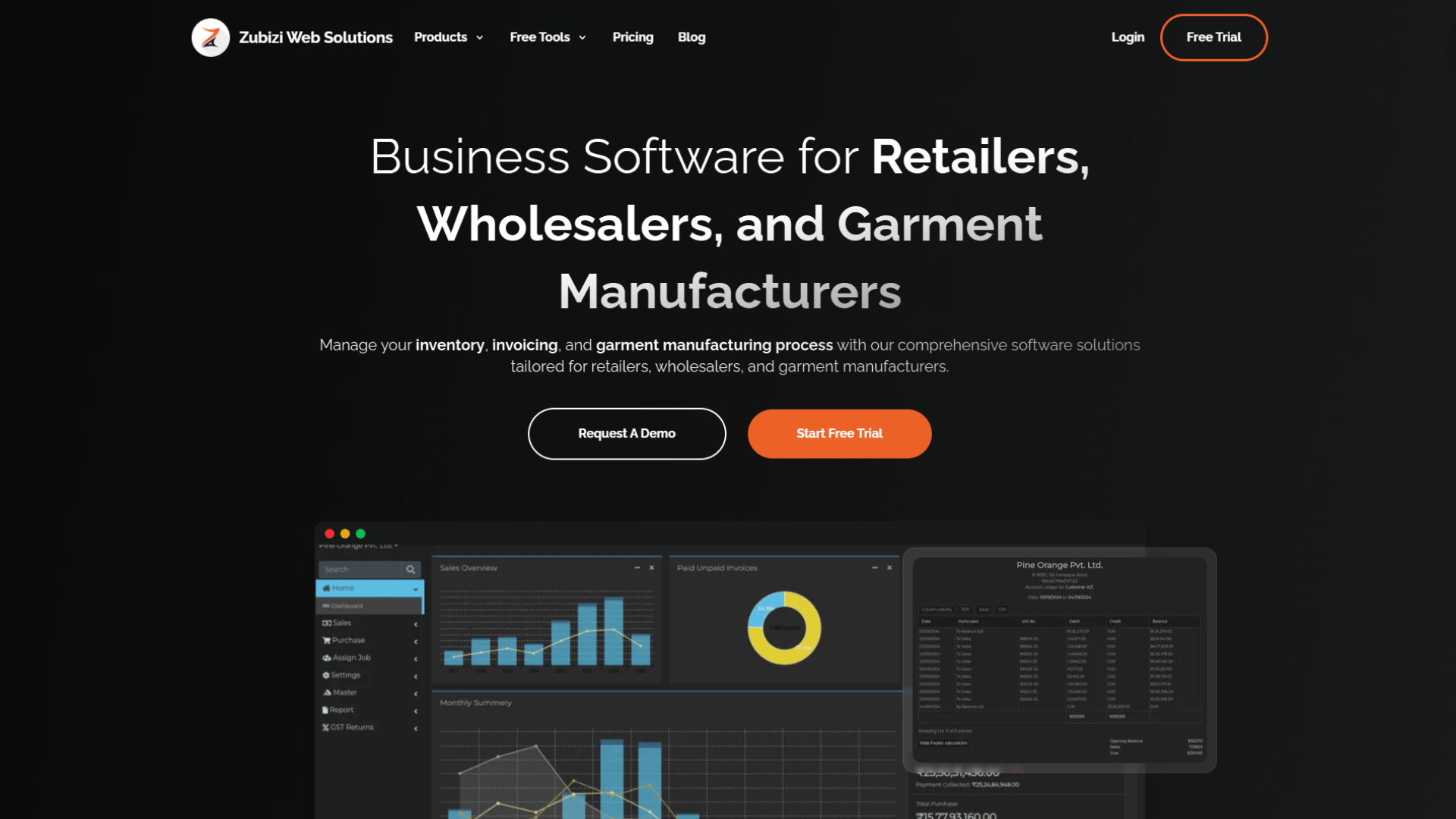
Cloud ERP built for Indian apparel businesses, from independent designers to mid-sized manufacturers.
Capabilities: size-colour-style variant matrix, production tracking from cutting to finishing, fabric inventory and wastage tracking, lot and batch traceability, pre-loaded HSN masters, and one-click GSTR-1 and GSTR-3B preparation.
India and RMG relevance: the GST handling is the differentiator. Rates switch automatically at the ₹2,500 threshold from the HSN master, removing the invoice-level customisation that global ERPs typically require in India.
Best for: small-to-medium Indian garment businesses wanting an India-native system without heavy customisation cost.
Consideration: the product’s centre of gravity is billing, inventory and retail workflow rather than industrial engineering or capacity planning. Not built for multi-country group operations.
8. Apna ERP / Bsquare Solutions India-origin garment ERP
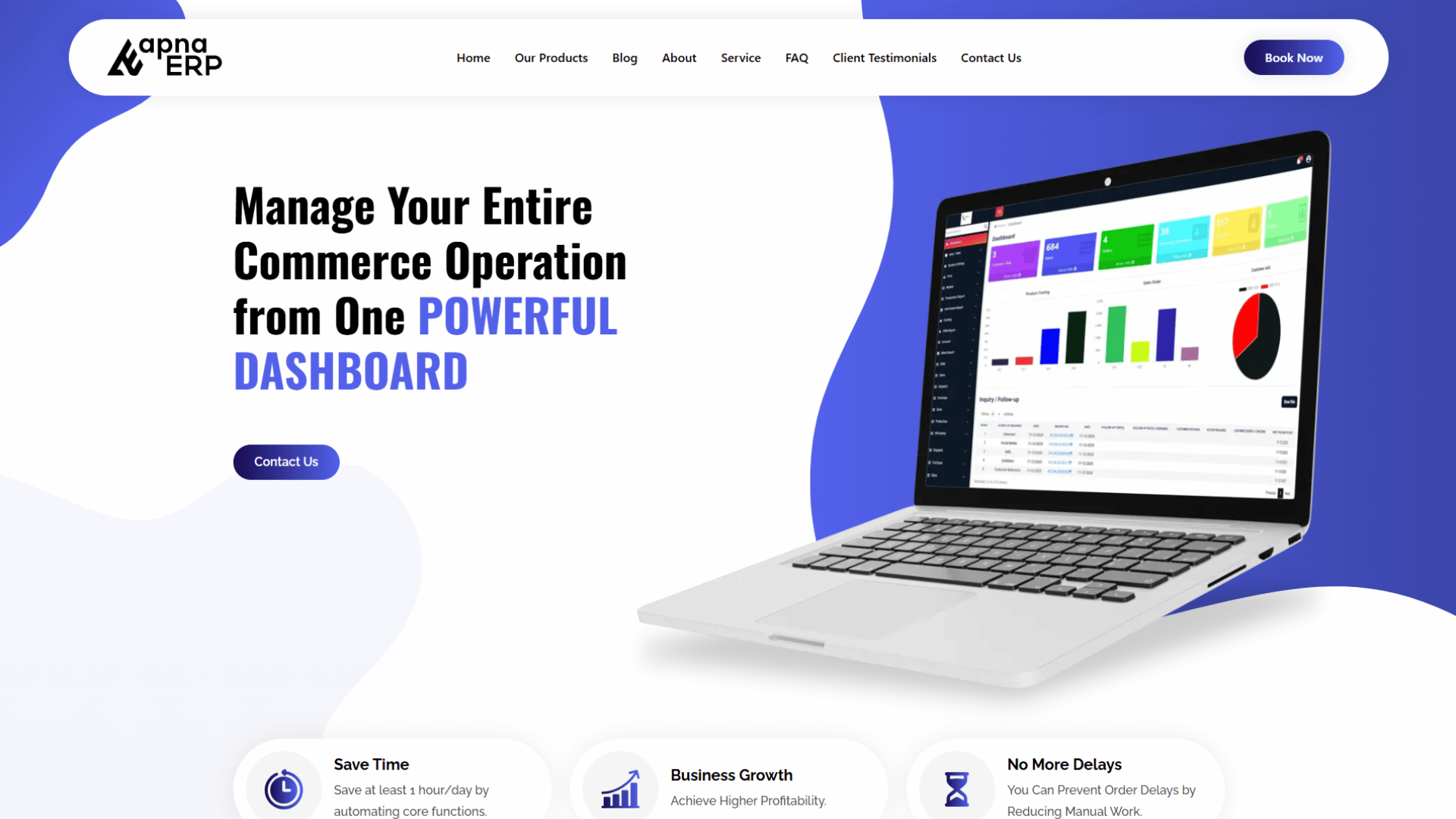
India-headquartered providers building custom garment-specific systems for domestic manufacturing clusters.
Capabilities: Style BOM, size-colour matrix, job-work order creation with contractor-wise issue and receipt reconciliation, wastage norms by contractor, job-work cost per piece, GST-compliant billing, e-invoice and e-way-bill generation, and stage tracking across spreading, cutting, stitching and finishing.
India/RMG relevance: This is the job-work category, and the compliance stakes are higher than most factories realise. Inputs sent to a job worker must return within one year, or the movement becomes a deemed supply from the original despatch date, with GST and interest payable. Capital goods carry a three-year clock. Movement needs a delivery challan under Rule 45, an e-way bill where applicable, and half-yearly ITC-04 reporting above ₹5 crore aggregate turnover. Textile and apparel job work sits at 5% under SAC 9988 while residual job work moved to 18% under GST 2.0, so misclassification cuts both ways.
Put plainly: a factory that loses track of fabric sitting at an embroidery unit is not merely short on WIP visibility. It is accruing a tax liability. No global ERP handles this out of the box.
Best for: SMB and emerging mid-size factories in Tiruppur, Surat, Ludhiana and Ahmedabad needing locally supported, compliance-ready systems.
Consideration: these are custom-development houses more than productised platforms. Verify vendor scale, support depth and source-code arrangements before a multi-factory rollout, and insist on a fully loaded written quote covering implementation, customisation, training and first-year support.
9. Stitch-MES shop-floor MES
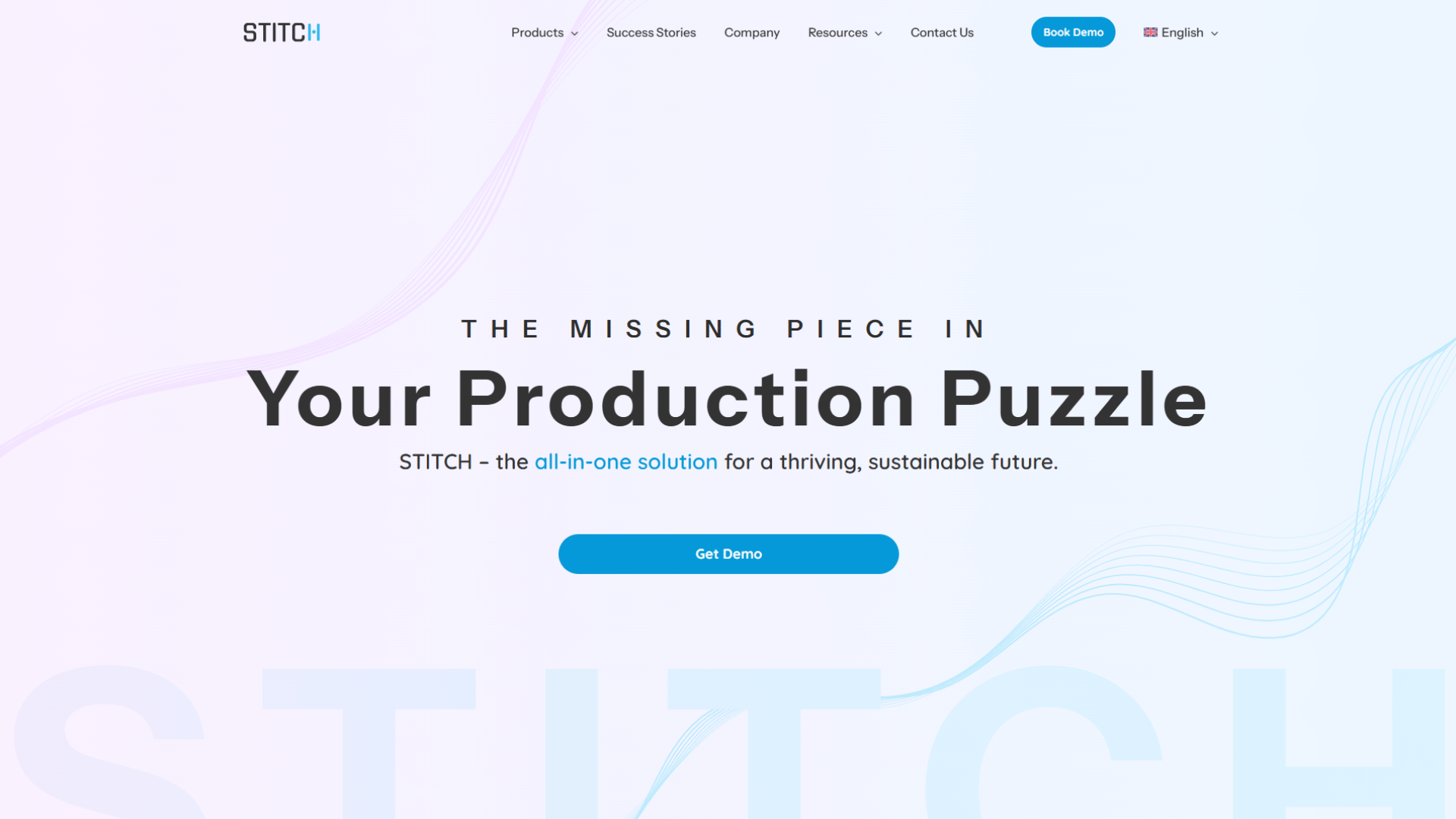
A manufacturing execution system for the Indian apparel market, capturing production data at the operation as it happens.
Capabilities: real-time production and work-in-progress tracking, bundle and operation-level capture, quality logging, industrial engineering and machine-maintenance modules, and a focused scope with faster implementation than enterprise alternatives.
India and RMG relevance: an MES answers a different question from an ERP. The ERP records what was reported at the end of the shift; the MES records what happened, minute by minute, with no separate data-entry step. For CMT factories where operator efficiency is the entire margin, that gap is the business case.
Best for: small-to-mid Indian factories wanting floor-level visibility without a full ERP overhaul.
Consideration: it is not an ERP and should not be evaluated as one. Vendor footprint and hardware-integration depth are narrower than the largest global MES players.
10. ERPNext (Frappe) open-source ERP
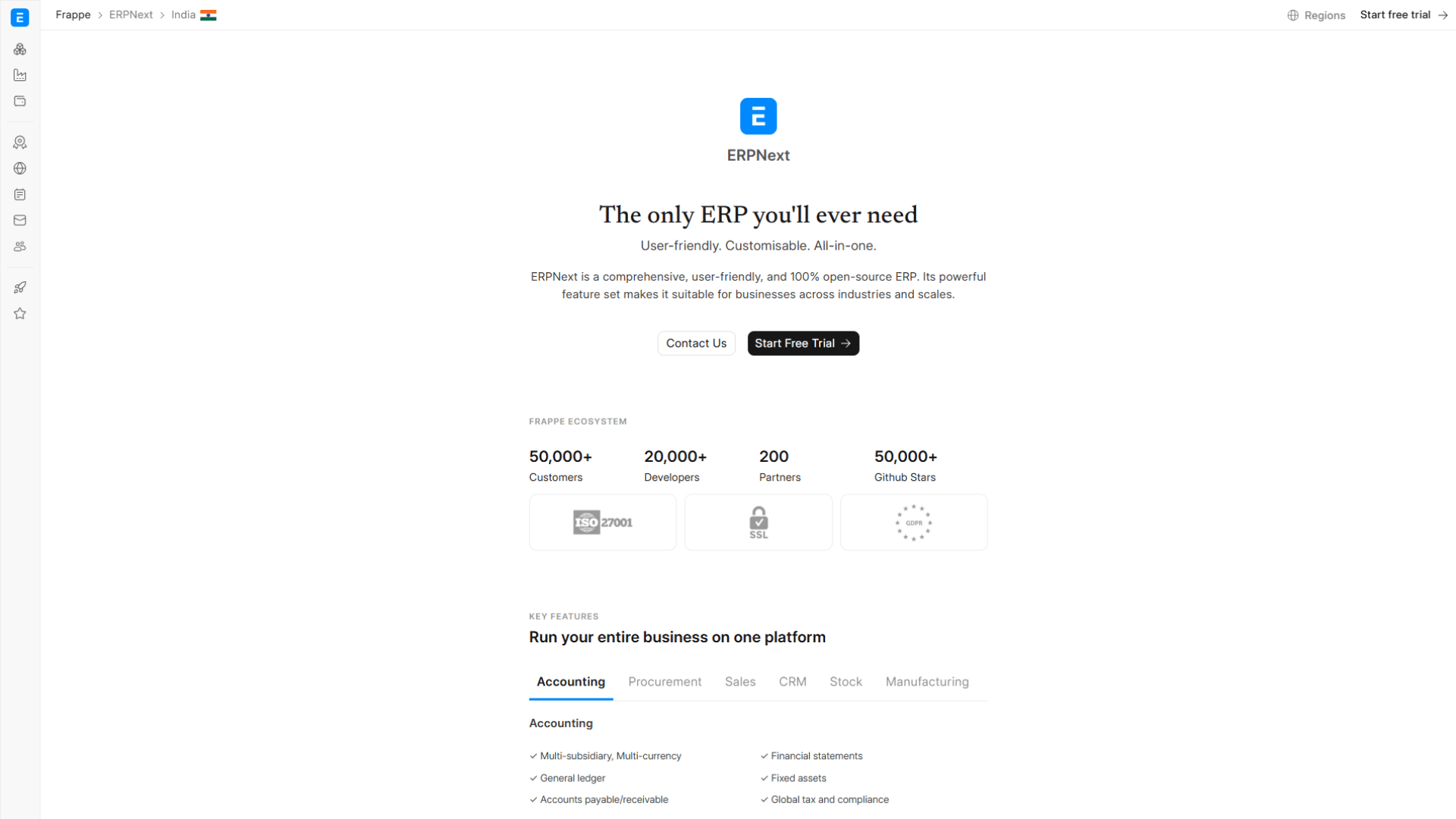
The lowest-cost structured alternative to spreadsheets, from an India-origin company with an active partner network.
Capabilities: item templates and variants for size-colour permutations, multi-level BOM and material requirements planning (MRP), work orders with auto-generated job cards, subcontracting, quality control, procurement and accounting on one platform. The India Compliance app adds GST returns, e-way bill, HSN/SAC and TDS, including ITC-04 support for subcontracting.
India and RMG relevance: native subcontracting plus ITC-04 handling puts ERPNext materially closer to Indian garment reality than most generic open-source options, and Frappe partners can configure RMG workflows at a fraction of proprietary licence cost.
Best for: small, cost-conscious factories and startups wanting structure beyond spreadsheets without a licence commitment.
Consideration: zero licence cost is not zero cost. RMG-specific configuration depends entirely on an in-house or partner technical resource, and there is no apparel-specific support from the core team. Budget for implementation, not software.
ERP Planning Module Vs Dedicated Planning Tool: Why Integration Beats Replacement
The two are built around different questions, and that is the whole point.
An ERP planning module is built around order and financial records. It answers what is due, what has been committed, and whether the materials exist. A dedicated planning tool answers something else entirely. Given real line capacity, real efficiency curves, real material arrival dates and real pre-production milestones, what can this factory actually produce, on which line, on which day, and what changes when an order moves?
| ERP planning module | Dedicated planning tool | |
| Built around | Order, material and financial records | Line capacity, SMVs and time |
| Output | What is due and whether stock exists | An executable, time-phased line-level schedule |
| On change | Re-run and reconcile | Dynamic recalculation of plan, materials and critical path |
| Visibility | Order status | Visual board with colour-coded exception alerts |
| Typical gaps | Line-level scheduling, capacity recalculation, T&A alerting, OTDP tracking | Financial consolidation, statutory compliance, procurement |
Madura Garments is the Indian working example: FastReactPlan running the plan, SAP running the commercial and financial system, and the interface removing duplicate entry between them.
The pattern extends beyond one factory. Ocean Lanka in Sri Lanka has publicly credited FastReactPlan with higher daily output and better prioritisation, and Tusuka in Bangladesh reported a 5% overall efficiency increase and a 9% OTDP improvement. Both are those manufacturers’ own reported results, in their own operating contexts.
The reliable conclusion: high-performing exporters integrate a dedicated planning tool with whichever ERP already runs their commercial operations, rather than stretching an ERP module to do planning it was never designed for.
How To Choose The Right ERP Integration For Your Factory
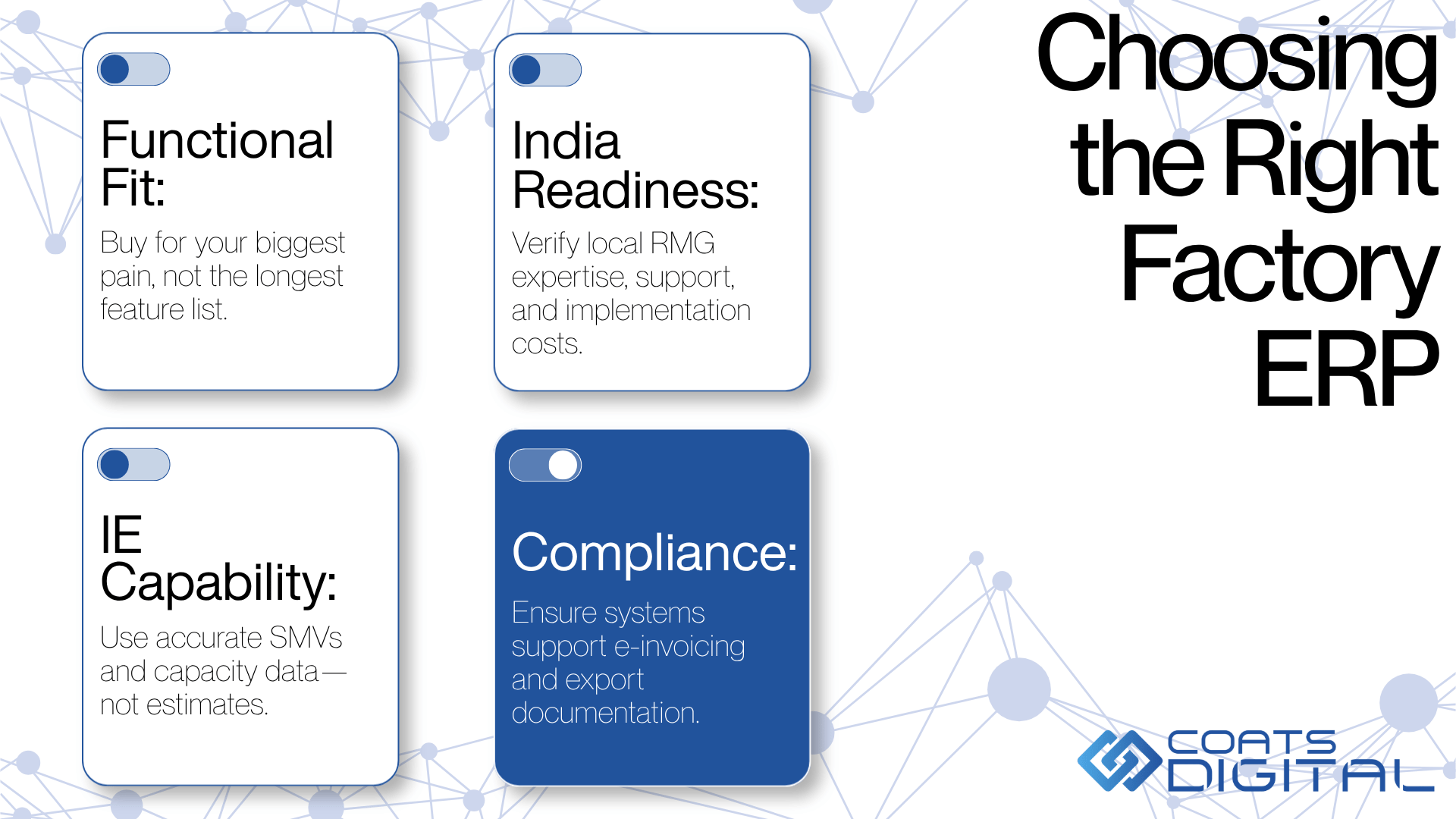
Four selection lenses
- Functional fit. Start with the most expensive failure, not the longest feature list. Is your sharpest pain planning discipline, commercial and financial integration, product-development speed, or floor execution visibility? Map the category to the failure that costs most, then buy in that order. Factories that buy in feature order rather than pain order end up with impressive software and the same delivery problems.
- India deployment readiness. Confirm local support in your cluster, and confirm the partner has RMG-specific rather than generic ERP experience. The test question: ask them to walk you through a job-work challan reconciliation and an export documentation flow, unscripted. Vendors who quote only the licence fee and disclose implementation cost later have told you something useful.
- Industrial engineering capability on the floor. Planning tools deliver most where industrial engineering staff can maintain accurate SMVs and capacity data. A plan built on guessed standard minutes is a spreadsheet with better graphics. Factories with limited industrial engineering capability should run a parallel capability-building programme, establishing defensible standards with a method-time-cost approach such as GSDCost alongside any planning rollout. Standards over estimates is what makes everything above it trustworthy.
- Compliance and documentation. E-invoicing is mandatory at ₹5 crore aggregate annual turnover under CBIC Notification 10/2023, and the obligation is permanent once crossed. Factories above ₹10 crore must report invoices to the Invoice Registration Portal (IRP) within 30 days. Newer still, preferential access under CETA, and shortly the India–EU agreement, is claimed against origin evidence. Ask whether your systems can produce it from records rather than from a scramble.
Factory-tier decision matrix
| Factory tier | Typical scale | Recommended combination |
| Small (under 500 operators) | Single or few lines, growing unit | ERPNext, Zubizi or an India-origin garment ERP for order, inventory and GST, with manual SMVs. Add dedicated planning when multi-buyer scale justifies it |
| Mid-size (500–3,000) | Multi-line, multi-buyer, export-focused | FastReactPlan for planning discipline, plus Dynamics 365, NetSuite or an India-origin ERP as the commercial layer. Add PLM if development-heavy |
| Large / multi-factory (3,000+) | Group with multiple divisions and export scale | FastReactPlan across all units, SAP S/4HANA or Dynamics 365 as group ERP, and a PLM layer for multi-brand development |
Where These Projects Actually Go Wrong
Four failure patterns account for most disappointing outcomes, and none of them is a software problem.
Sequencing planning before standards. A factory installs a planning tool, fills it with SMVs nobody trusts, and within three months the planners are back in Excel because the board claims a line can do something it demonstrably cannot. Fix the standards first, or at least in parallel.
Treating integration as an IT deliverable. The interface is the easy part. Agreeing which system owns which field is the hard part. When both the ERP and the planning tool believe they own the ex-factory date, the integration becomes an argument with a data feed attached.
Buying an ERP to solve a planning problem. Common, expensive, and usually discovered around month nine of an eighteen-month programme. The symptom is a business case written around visibility and a scope written around finance.
Underestimating master data. Style masters, BOMs, operation bulletins and supplier records built over a decade of workarounds do not migrate cleanly. Factories that budget for data cleansing finish roughly on time. Those that do not, do not.
The Right Stack Protects Your Margin
ERP integration in 2026 is an operational foundation, not IT overhead. Section 301 duties carry no expiry date, India competes in the US without the textile relief extended to several rivals, the UK has opened on preferential terms that must be evidenced, and GST compliance keeps tightening at invoice level.
The factories that win orders in this environment confirm capacity accurately, start on time, and show cost and origin transparency to a sceptical buyer. All three depend on how well systems talk to each other, not on which single system a factory buys.
A 300-operator Tiruppur knit unit does not need what a multi-division export group needs, and buying as though it does is how ERP programmes fail quietly and expensively. Start where the integration gap is sharpest, prove the value there, and build out.
Explore further: production planning solutions · method-time-cost and SMV accuracy · fabric optimisation.
Frequently Asked Questions
-
What is the best ERP integration option for Indian garment factories?
There is no single best ERP, because no ERP replaces dedicated planning. The reliable pattern is a specialist planning layer such as FastReactPlan integrated with whichever ERP runs your commercial operations, whether that is SAP, Dynamics 365, NetSuite or an India-origin system. Which ERP fits inside that pattern depends on factory size, export orientation and existing IT investment.
-
What is the difference between an ERP and a production planning tool for garments?
An ERP is built around order, material and financial records, and answers what is due and whether stock exists. A production planning tool is built around capacity and time, and produces an executable line-level schedule from standard minutes, efficiency curves and critical-path dates. The ERP records commitments; the planning tool determines whether they are achievable.
-
How does FastReactPlan integrate with an ERP like SAP?
Through documented data interfacing rather than replacement. Data is exchanged on a timed or triggered basis through an intermediary shared file system, which lets each system run its own integrity checks. At Madura Garments, the integration removed duplicate data entry between planning and SAP and improved data integrity between departments
-
What’s the best ERP for a small garment factory in India?
Start with ERPNext, Zubizi or an India-origin garment ERP covering orders, inventory and GST or HSN handling, then add dedicated planning once multi-buyer scale justifies it. The trade-off is real: lower cost now, but RMG workflows depend on partner or in-house customisation. ERPNext has no licence fee and still needs a technical resource.
-
How does GST affect ERP choice for Indian garment manufacturers?
GST 2.0, effective 22 September 2025, taxes garments at 5% up to ₹2,500 per piece and 18% above, having removed the 12% slab and raised the concessional threshold from ₹1,000. The Council also cut man-made fibre from 18% to 5% and man-made yarn from 12% to 5% to correct the inverted duty structure. India-native ERPs map these at invoice level from an HSN master; global ERPs generally need a customisation project.
-
What ERP features matter most for job-work-heavy factories?
Challan generation under Rule 45, material issue-versus-receipt reconciliation, contractor-wise wastage norms, job-work cost per piece, and ITC-04 reporting. The one that carries real financial risk is the return clock: inputs not returned within a year become a deemed supply from the original despatch date, with tax and interest due. A system that ages open challans automatically prevents a liability that manual tracking routinely misses.
-
Is open-source ERP viable for an Indian garment exporter?
Yes, for small units. ERPNext provides BOM, MRP, subcontracting, inventory, procurement and accounting with no licence cost, and the India Compliance app covers GST returns, e-way bill, HSN/SAC and ITC-04. Apparel-specific configuration depends entirely on an in-house or Frappe-partner resource, so budget for implementation rather than software.
-
How long does an ERP-to-planning integration take?
Far less depends on the interface than on data readiness. The determining factors are SMV accuracy, master-data quality across styles and BOMs, how many fields flow in each direction, and whether field ownership between systems is agreed before technical work starts. Factories that settle those first move quickly. Factories that discover them mid-project do not.
-
How does US tariff volatility affect ERP and planning investment decisions?
Landed-cost assumptions have moved repeatedly since 2025: roughly 50% duties under the earlier regime, relief under the interim agreement, a temporary 10% surcharge, and now Section 301 duties with no expiry date. Factories cannot control the rate, only cost accuracy, delivery reliability and documentation quality. That makes integration a hedge against margin pressure rather than discretionary IT spend.
How Indian Garment Exporters Manage On-Time Delivery for Multiple Global Buyers at the Same Time

How US Clothing Brands Protect Profit Margins When Supplier Production Costs Go Up

Apparel Production Planning Software For Large Garment Manufacturers In Bangladesh
All Blog Categories
- Production Planning
- Corporate
- Design and Develop
- Fabric Optimisation
- Method Time Cost Optimisation
- Shop floor execution
- Supply Chain Solutions
- Sustainability
- Videos