10 Best Garment Costing Software for Factories in India (2026)
by Kunal Kapur
 9
Mins Read
9
Mins Read
Key Takeaways
- Best overall: GSDCost leads on Predetermined Motion Time System (PMTS)–grade Standard Minute Value (SMV) accuracy; GSDQuest adds AI-driven image-to-Bill-of-Labour (BOL) that cuts costing time by around 90%.
- Costing software splits into four categories: PMTS platforms, AI estimators, Product Lifecycle Management (PLM) costing modules and production planning tools.
- The February 2026 India-US framework set an 18% reciprocal tariff on Indian apparel, below Bangladesh (19%) and Vietnam (20%) on the headline rate.
- Fast, defensible Cost of Making quotes now decide which factories win re-evaluated buyer orders. Stopwatch-based costing cannot keep pace.
- Every PMTS here (General Sewing Data [GSD], Pro-SMV, SewEasy, MODAPTS) derives from the same Methods-Time Measurement (MTM) motion database; buyer alignment, not raw method, usually decides the choice.
- Small factories are not priced out: timeSSD’s pay-as-you-go model and India-built Pro-SMV lower the entry barrier.
- A PLM costing module such as WFX manages commercial cost data but does not generate SMVs from a tech pack. Know the difference before you buy.
Why Garment Costing in India Is a Daily Operational Problem
A tech pack lands in an industrial engineer’s inbox at 10 am. By 3 pm, the buyer wants a Cost of Making (CM) quote. Between those two points, the industrial engineering (IE) team has to read the construction, decompose every sewing, cutting and finishing operation, assign a Standard Minute Value (SMV) to each one from historical data or a stopwatch estimate, calculate CM against the factory’s current cost per minute, and submit a figure that can be defended if the buyer asks why it sits 12% above a competing quote from Bangladesh.
That sequence repeats several times a week at every export-oriented Indian factory. It consumes significant IE bandwidth, it produces SMVs that shift depending on which engineer ran the analysis, and it generates costs that are hard to defend when a buyer’s costing team, working from its own GSD-trained benchmarks, challenges the numbers operation by operation.
The wider context raises the stakes. India is at a structural inflexion point in global apparel sourcing. After a turbulent 2025 in which duties on many Indian goods reached as high as 50%, the February 2026 India-US joint statement set a reciprocal tariff of 18% on Indian textiles and apparel. Buyers are re-evaluating India, and the factories that respond fastest and most credibly to requests for quotation (RFQs) will take the orders. This guide ranks the ten tools best suited to generating accurate garment costs from tech packs and design images, and explains exactly where each one fits.
Table of contents
- The core problem: why manual costing does not scale
- How we ranked the tools
- Comparison table
- The 10 best tools, reviewed
- How to build a garment cost from a tech pack, step by step
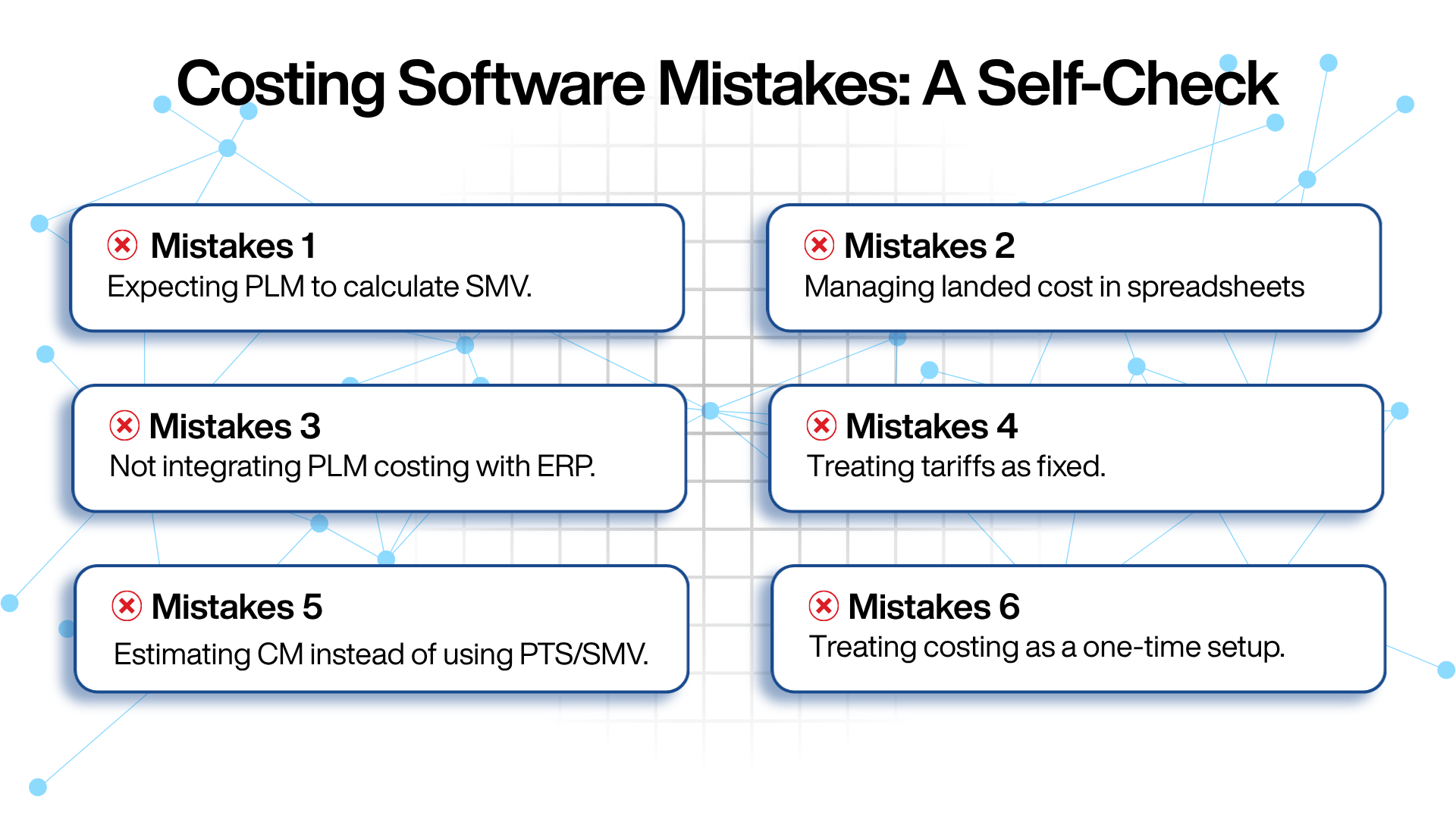
- Common costing errors: a self-diagnostic
- FAQs
The Core Problem: Why Manual Costing from Tech Packs Does Not Scale
What a manual costing process actually involves
Costing a new style from a tech pack is not a single calculation. The IE engineer or merchandiser reads the construction sequence, decomposes it into discrete operations, assigns a time value to each one (from memory, from historical data, or from a stopwatch study run on a broadly similar style), applies the factory’s efficiency assumption, calculates CM, and formats the output for the buyer.
The difficulty sits in the interpretation. Assigning a time to “attach collar” requires knowing which construction method the factory will actually use, and that method judgement is subjective unless the team works from a common standard. Two competent engineers can look at the same tech pack and reach different totals, which is exactly the weakness buyers exploit when they open-cost a quote.
Definition: Standard Minute Value (SMV) Standard Minute Value is the standard time, in minutes, for a qualified operator working at standard performance to complete a specific sewing, cutting or finishing operation, inclusive of allowances for rest and personal needs. It is the foundational unit for calculating Cost of Making (CM) in garment manufacturing. (Definition aligned with the ILO’s Introduction to Work Study methodology.)
Why experience-based SMV estimates create three specific problems
Inconsistency across styles and engineers: Two IE engineers analysing the same tech pack will assign different SMVs if they are not working from a shared method standard. At the CM submission stage, that means two people in the same factory can produce two different prices for one style.
No way to pre-cost before production: A stopwatch time study needs a running line and a trained operator working at standard pace. For a new style, pre-production, at the precise moment the buyer wants the quote, there is no line to observe. Teams fall back on estimation, and estimation collapses the moment a buyer challenges it.
Time cost against Stock Keeping Unit (SKU) volume: A mid-size Indian exporter handling 50 to 100 active styles a season, at 25 to 40 operations per style, is running thousands of individual SMV estimates by hand every season. The hours involved are out of proportion to the margin that accurate costing recovers, which is why the work is so often rushed.
Formula: CM and cost per minute:
CM Cost = Total Garment SMV × Factory Cost Per Minute;
Cost Per Minute = Monthly Labour Cost ÷ Available Productive Minutes Per Month;
Effective Cost Per Minute = Quoted Cost Per Minute ÷ Factory Efficiency %
A factory with a cost per minute of ₹0.85 running at 55% efficiency has an effective cost per minute of ₹1.55. The same factory improving to 70% efficiency reduces its effective cost per minute to ₹1.21 with no change in wages.
To calculate CM accurately for a garment factory in India, multiply the total style SMV by the factory’s cost per minute, then adjust for actual factory efficiency to arrive at the true effective cost per minute.
How We Ranked the Tools (and Why the Window Matters)
India’s export window is open, briefly. The February 2026 India-US framework reduced the US reciprocal tariff on Indian goods to 18%, placing India below Bangladesh at 19% and Vietnam at 20% on the headline reciprocal rate. With the United States taking roughly $10.5 billion of Indian textiles and apparel a year, buyers are actively re-evaluating India. Accurate, fast CM quotes have become a competitive advantage rather than a back-office nicety.
The selection problem. Garment costing software is not one category. PMTS platforms derive SMVs from motion analysis. AI estimators generate a first-pass cost from an image or tech pack. PLM costing modules manage commercial cost data. Production planning tools schedule capacity using SMVs as an input. Buying a tool from the wrong category, a PLM when you needed a PMTS, is the single most common and most expensive mistake in this space.
The five ranking criteria. Each tool below is assessed on:
- SMV / Bill of Labour accuracy: PMTS-based, method-anchored times versus experience or estimate.
- Pre-production capability: can it cost from a tech pack or image before production starts?
- India availability and support: is it actively deployed or marketed to Indian manufacturers?
- Governance and scalability: centralised Bill of Labour, version control, multi-line or multi-factory use.
- Integration: does it connect to planning, shop-floor or PLM systems?
Top 10 Garment Costing Software Comparison Table
| Rank | Tool | Type | Best for | Pre-production costing? |
| 1 | GSDCost | PMTS / method-time-cost | Mid-to-large export factories; IE-led costing | Yes, from tech pack |
| 2 | GSDQuest | AI + PMTS add-on | High RFQ volume; image-to-BOL in seconds | Yes, from product image |
| 3 | SewEasy | PMTS (MTM-based) | Lean costing; Walmart/ASDA-aligned buyers | Yes, from operation analysis |
| 4 | Pro-SMV | PMTS (MTM-2 based) | India-developed; India-supported IE teams | Yes, from tech pack |
| 5 | timeSSD | PMTS (MTM-2, cloud SaaS) | Budget-accessible entry; IE training | Yes, cloud-based |
| 6 | ETC (Engineered TruCost) | PMTS (4th-gen MTM) | Brand / sourcing-office benchmarking | Yes |
| 7 | MannyAI Seamstream | AI cost estimator (beta) | Fast first-pass RFQ costing | Yes, from image or tech pack |
| 8 | WFX PLM | PLM with costing module | Commercial cost management; vendor collaboration | FOB level only, not SMV depth |
| 9 | Structured Excel + GSD-trained inputs | Manual + trained input | Very small factories; entry-level | With GSD-trained SMV inputs |
| 10 | FastReactPlan | Production planning | Capacity scheduling using accurate BOL data | N/A planning output, not costing input |
The 10 Best Garment Costing Software for Factories in India (2026)
1. GSDCost (Coats Digital): Industry-Standard PMTS for SMV and Bill of Labour
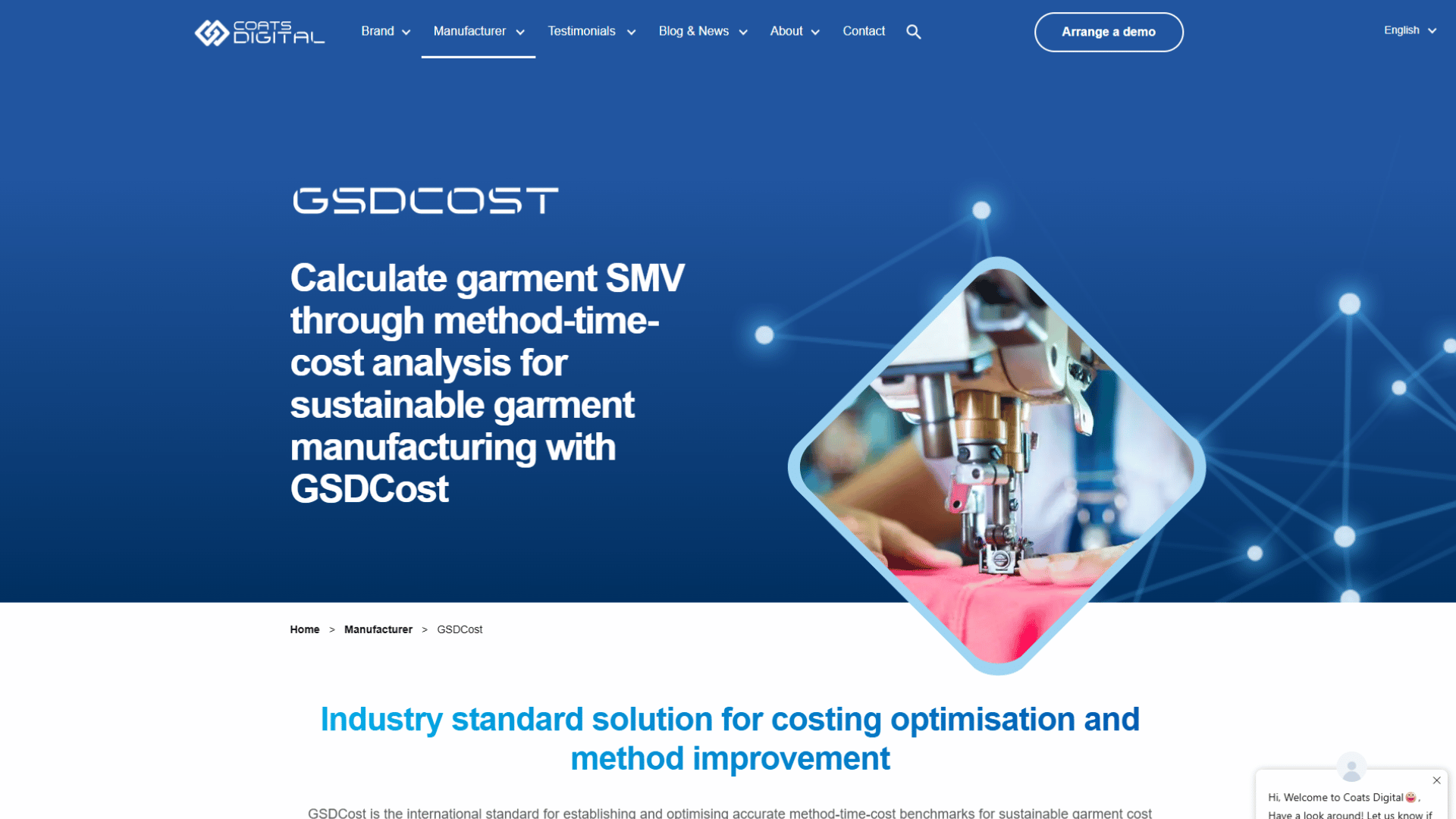
GSDCost is the internationally recognised method-time-cost benchmarking platform for sewn products, and the closest thing the industry has to a common costing language between brands and factories.
Its core is a predetermined time-motion database of motion-code library, each carrying an internationally benchmarked Standard Minute Value. IE practitioners decompose an operation into its component motions, assign the relevant GSD codes, and derive an SMV that is independent of any single factory’s current performance. That independence is what makes pre-production costing from a tech pack both accurate and defensible when a buyer’s team pushes back. The codes act as building blocks for thousands of operations and unlimited styles, letting a factory build its own standard Methods Database rather than rely on individual memory.
The Costing Excellence functionality lets a factory create a standardised Bill of Labour, issue it to multiple vendors at once, and compare CM responses from a single view. A built-in fair-wage tool combines the style SMV with factory efficiency, contracted hours and agreed wage rates to benchmark labour cost against fair-wage standards. GSDCost was recognised in 2025 with a Silver award at the UK Digital Excellence Awards and two Just Style Excellence Awards.
Best for: Mid-to-large Indian export factories with dedicated IE teams, and any factory supplying buyers whose own costing teams work from GSD benchmarks.
Considerations: It requires trained, certified GSD practitioners and an upfront investment in that capability. For a factory with very low RFQ volume or fewer than three active product categories, that investment can be disproportionate.
India relevance: Coats Digital maintains an India operation in Bangalore, and its solutions run in more than 3,000 factories worldwide.
2: GSDQuest (Coats Digital): AI-Powered Image-to-Bill-of-Labour

GSDQuest is an AI-powered module within GSDCost, launched on 27 August 2025. The IE team uploads a product image; the AI detects visible and hidden construction features, maps them to the proprietary QED Library, and generates a standardised Bill of Labour using GSD motion codes and international standard time benchmarks in seconds rather than hours.
Coats Digital reports an approximately 90% reduction in costing time. The QED Library is what separates GSDQuest from generic AI estimators: it maps visual features to PMTS-grade construction methods, not to loose time approximations. Because the output rests on the same scientific methodology as GSDCost, it stays consistent across teams and suppliers, and it opens SMV analysis to professionals who are not certified GSD practitioners.
Best for: Indian factories fielding high volumes of RFQs on tight response windows, and merchandising teams without a dedicated GSD practitioner available for every new style.
Considerations: GSDQuest is a module, not a standalone product. It requires a GSDCost licence to function. Confirm the current list of supported garment categories with Coats Digital before committing.
India relevance: It runs on the same platform and support infrastructure as GSDCost, and speaks directly to India’s need to respond quickly to renewed buyer interest after the trade framework.
GSDQuest workflow: Upload product image → AI detects visible and hidden features → QED Library maps to standard construction methods → standardised Bill of Labour generated instantly. Costing time reduced by around 90%.
3: SewEasy: MTM-Based PMTS for Lean Costing and Buyer Compliance

SewEasy is a PMTS developed by SewEasy Pvt. Ltd. in Sri Lanka, built on MTM methodology and positioned around lean transformation in garment manufacturing. It produces method-anchored SMVs from operation analysis and pre-production, and is recognised in University of Manchester research alongside GSD and MODAPTS as one of the sector’s established MTM-based costing systems. Walmart and ASDA sourcing adopted SewEasy for quick SMV estimation and open-costing compliance within their lean programme.
Best for: Factories whose key buyers are aligned with the Walmart/ASDA lean programme, and teams focused on lean transformation who want fast operation-level SMVs
Considerations: GSD is more widely adopted among large international brands, so buyer acceptance of SewEasy varies by customer. Its publicly documented user base is smaller than GSDCost’s.
India relevance: South Asia deployments are documented by the vendor, and the platform is used within the region’s supply base. Confirm India-specific references directly before relying on them.
4: Pro-SMV: India-Developed PMTS for Garment IE Teams

Pro-SMV (Professional Standard Minute Value) is developed by Methods Apparel Consultancy India Pvt. Ltd., and is the only PMTS in this list built in India. It is based on MTM-2 methodology and lets IE teams derive SMVs from tech packs pre-production. Its emphasis is method engineering, finding the best way to sew an operation, not simply recording a time, which appeals to IE teams pursuing productivity improvement. A companion module, Pro Cut SMV, extends the same approach to the cutting room.
Best for: Indian IE teams that want a locally developed, India-supported PMTS, particularly factories in established clusters such as Tirupur, Surat and Bengaluru where local support and training matter.
Considerations: It carries lower global recognition than GSDCost. Where buyers benchmark against GSD, method alignment may need discussion.
India relevance: Developed in India by an Indian company, with domestic training and implementation support. Directly India-relevant.
5: timeSSD: Cloud-Based, Pay-As-You-Go PMTS
timeSSD (Astailor Shine) is an Azure-hosted, cloud-based PMTS built on MTM-2, distinguished by a pay-as-you-go pricing model that removes the upfront licence barrier. There is no installation, and new users receive a free trial credit to build their first operation lists. That makes it the most financially accessible PMTS entry point in this list.
Best for: Smaller Indian factories for whom a full PMTS licence is a barrier, IE training institutions, and factories building SMV capability before committing to GSDCost.
Considerations: Its global user base is smaller than GSDCost’s, and MTM-2 is not identical to GSD methodology, which may require an alignment conversation with buyers who benchmark against GSD.
India relevance: As cloud Software-as-a-Service (SaaS), it is accessible anywhere with an internet connection, and it holds a 4.6 out of 5 rating from ten reviews on Capterra India. National Institute of Fashion Technology (NIFT) students have demonstrated the tool with no prior training.
6: ETC (Engineered TruCost): Fourth-Generation MTM for Sourcing and Brand Costing
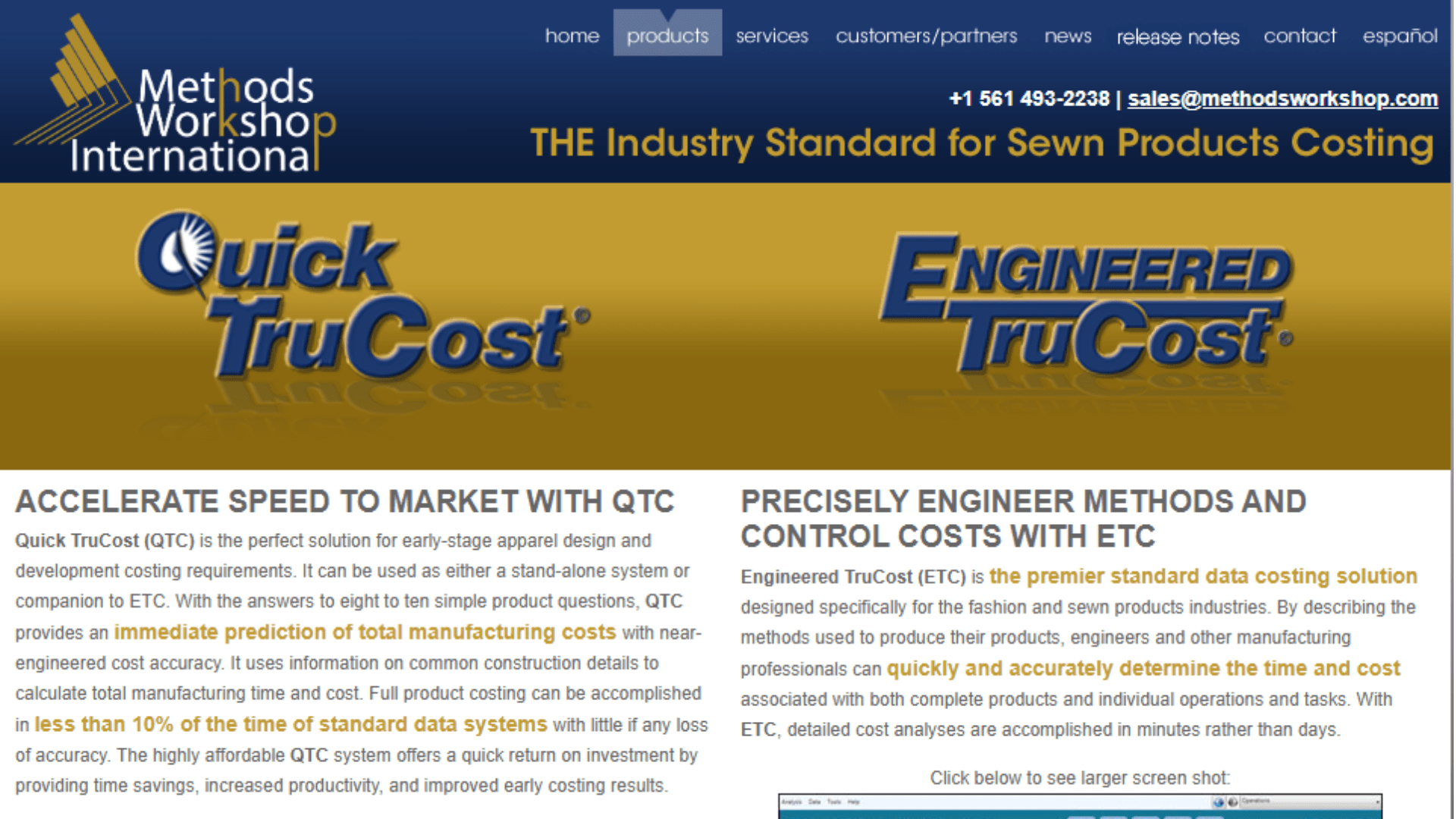
Engineered TruCost is a PMTS built on a fourth-generation MTM statistical database, designed for fashion and sewn products. The vendor positions it around speed, with operations analysed in minutes rather than days. It is used primarily by brand sourcing teams and compliance auditors for Cut-Make-Trim (CMT) benchmarking.
Best for: Brand-side or sourcing-office costing teams, compliance auditors, and factories whose buyers benchmark against ETC.
Considerations: Publicly available India deployment data is limited; do not assume broad India adoption without a verified reference.
India relevance: Globally available, with no India-specific adoption data confirmed in public sources. Verify directly with the vendor.
7: MannyAI Seamstream: AI-Native First-Pass Cost Estimator (Beta)
MannyAI’s Seamstream, beta-launched on 17 July 2025, uses AI and a database of more than 11,000 elements to generate a Bill of Materials (BOM) and an Operations Breakdown from an uploaded tech pack or product image, estimating an SMV for each construction step by garment type. Co-founder and CTO Simon Johnson describes the workflow as going from a photo to the steps needed for a production line in about two minutes.
Best for: Factories that need fast, accessible first-pass costing without PMTS-practitioner overhead, and sourcing or buying teams at SMEs.
Considerations: It remains at beta status as of early 2026, with category support that started at shirts, joggers, sweatshirts and hoodies and is still expanding. It is a first-pass estimator, not a PMTS replacement, and does not produce buyer-negotiation-grade SMVs
India relevance: MannyAI is backed by PDS Ltd, a major India-based fashion supply-chain company, alongside Plug and Play Tech Centre. Confirm India market availability directly with MannyAI.
8: WFX PLM: PLM with a Commercial Costing Module
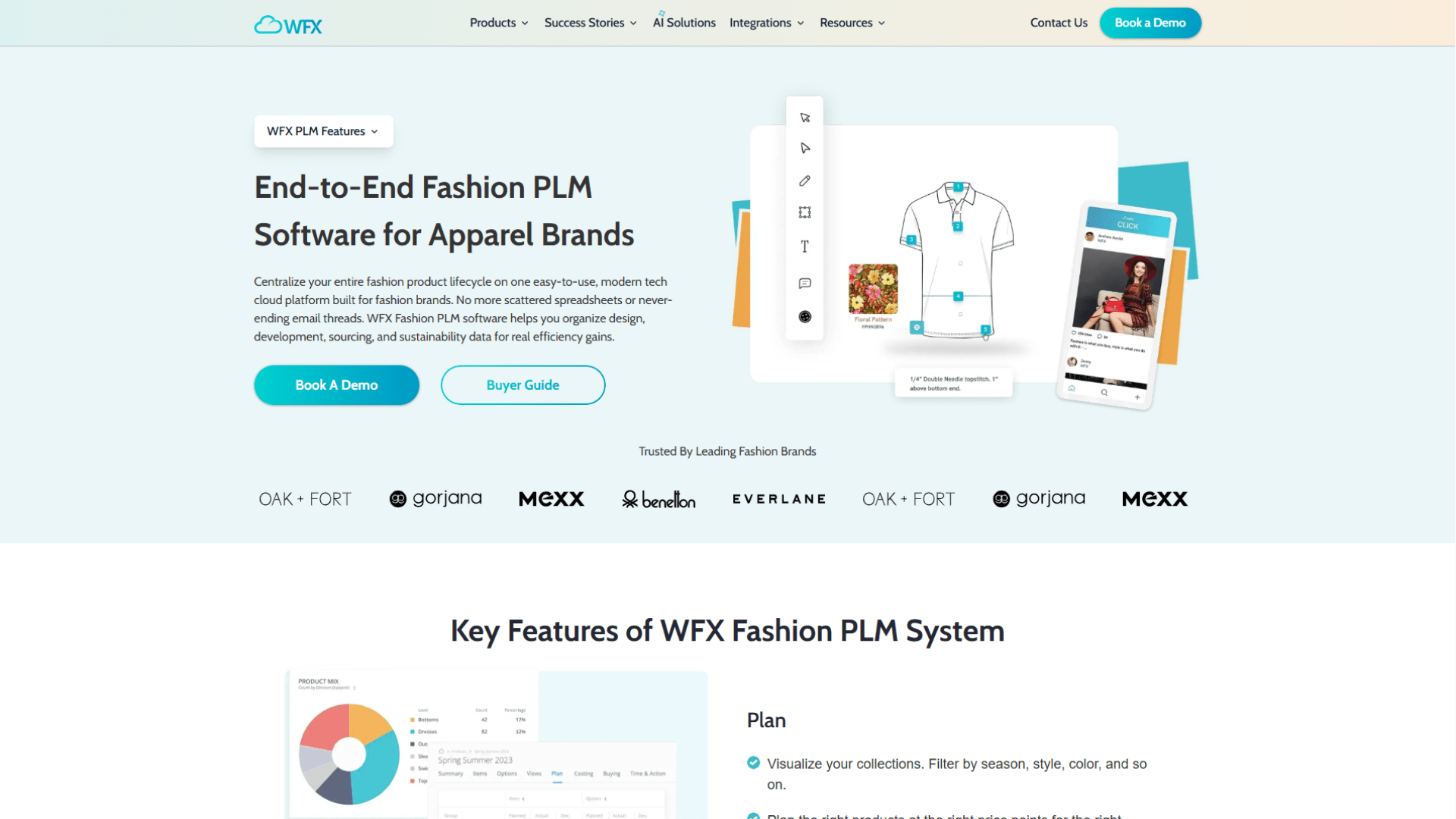
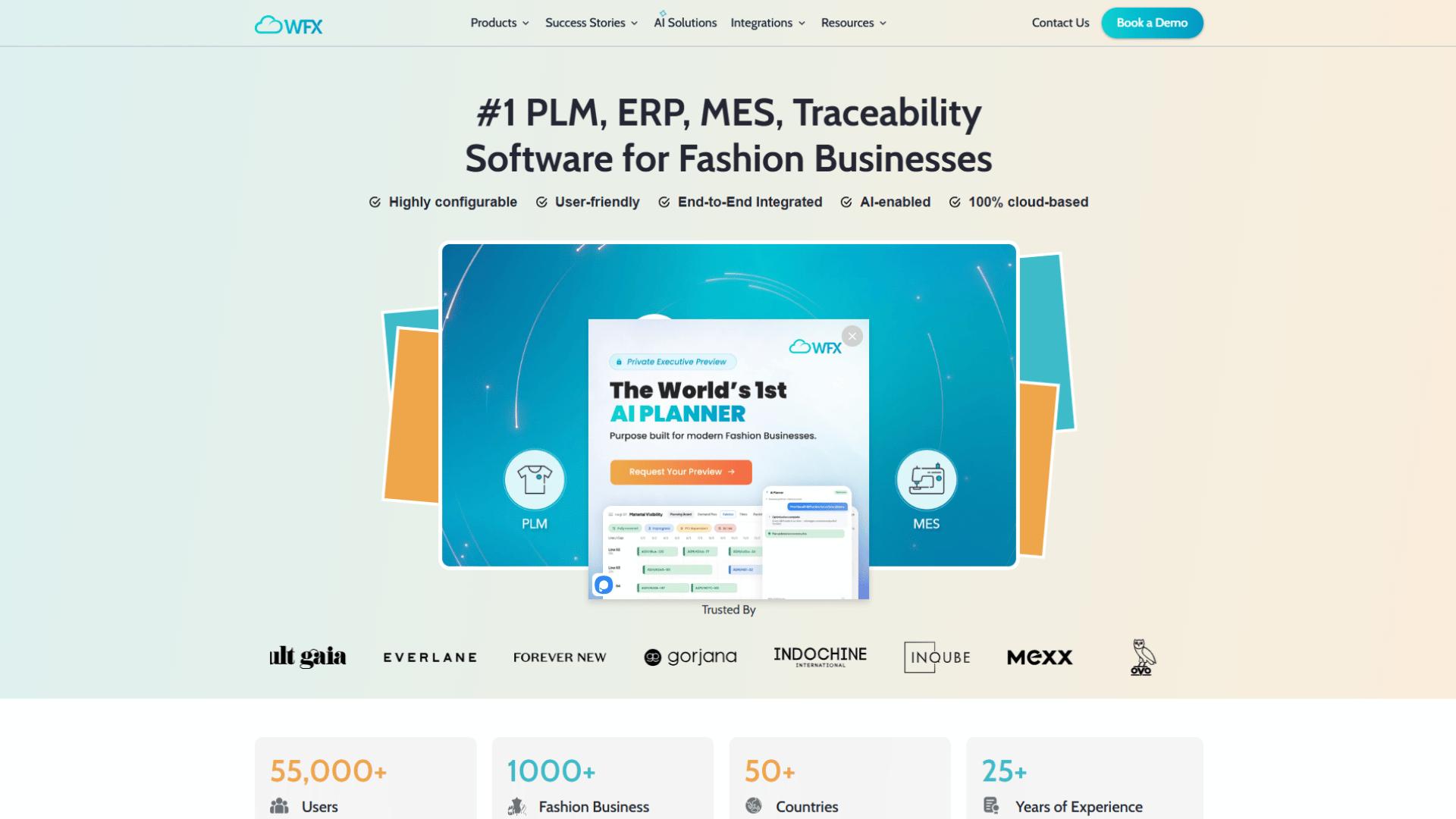
WFX PLM is a cloud-based product lifecycle management platform used by more than 450 fashion companies across 30-plus countries. Its costing module supports Excel-like grid costing, multiple cost types (Cut-Make, Free on Board [FOB], Landed and Delivered), real-time margin visibility, and vendor cost submission and approval workflows.
One point must be stated plainly: WFX PLM manages cost data; it does not generate SMVs or a Bill of Labour from a tech pack. It operates at FOB and commercial-costing level, not at method-time-cost depth. If your requirement is a defensible SMV, this is not the tool; if you require to consolidate, compare and approve supplier costs in one system, it is a strong fit.
Best for: Indian manufacturers supplying brands that use WFX as their PLM and require cost submissions through the platform.
Considerations: It is not a PMTS tool and does not replace one. Treat it as the commercial layer that sits on top of a properly derived SMV.
India relevance: WFX maintains an R&D centre in India and is widely used across the Indian export ecosystem.
9: Structured Excel Templates with GSD-Trained SMV Inputs
This is not a commercial product, but an honest entry that reflects where most small Indian factories are today. A structured Excel Bill of Labour template, populated with SMVs from a GSD-trained resource, provides a workable costing foundation at zero software cost for a factory with a single IE resource and fewer than three product categories.
Best for: Very small factories (under roughly 200 operators, one or two categories) where a software investment is not yet justified.
Considerations: No version control, SMV inconsistency between engineers, and no ability to scale much beyond around 30 active styles. This is precisely the status quo that every PMTS tool in this list is designed to replace.
India relevance: The majority of small-to-mid Indian factories currently cost this way, which is why the inflexion point to dedicated software matters.
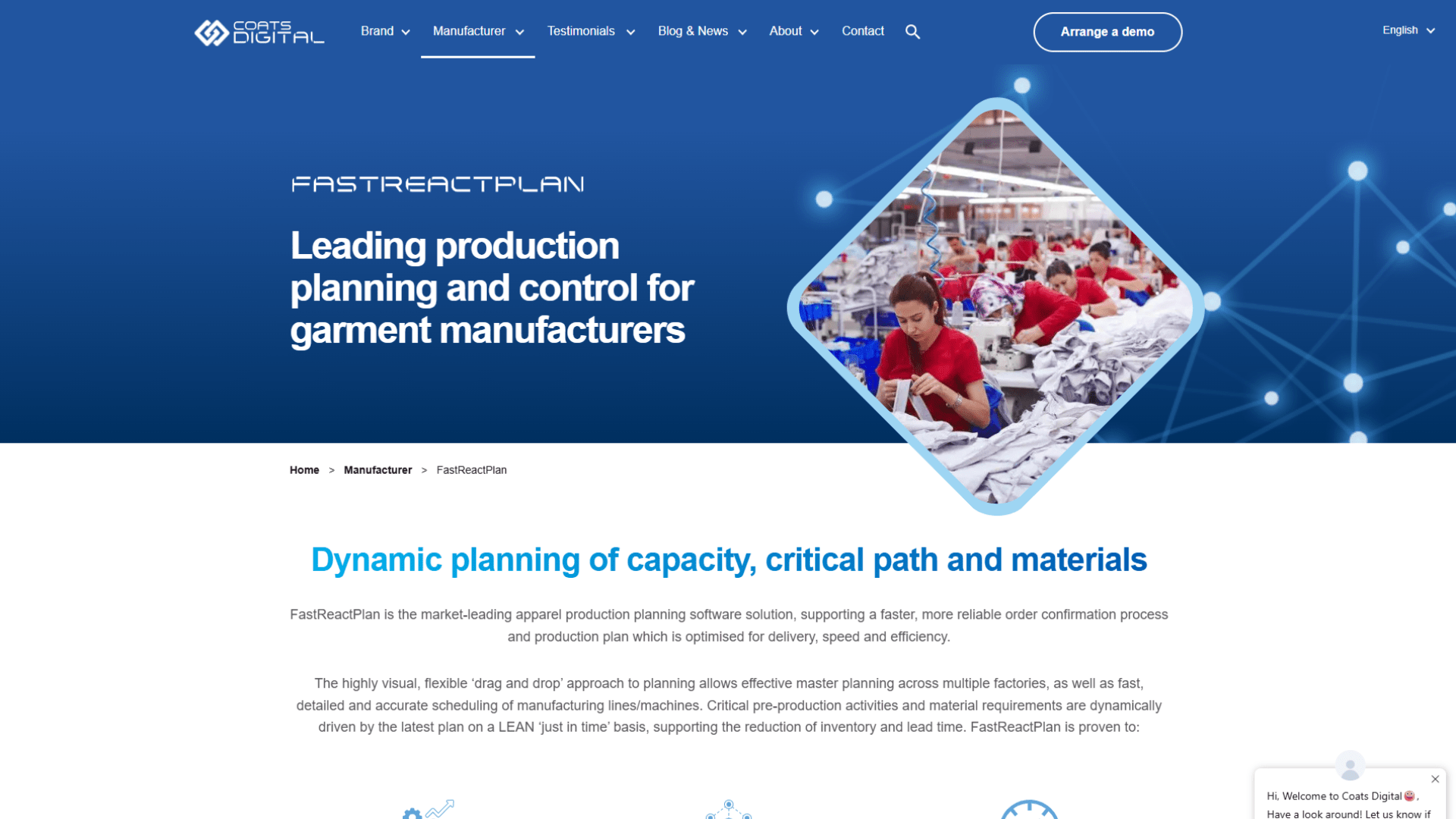
10: FastReactPlan (Coats Digital): Production Planning Dependent on Accurate SMV
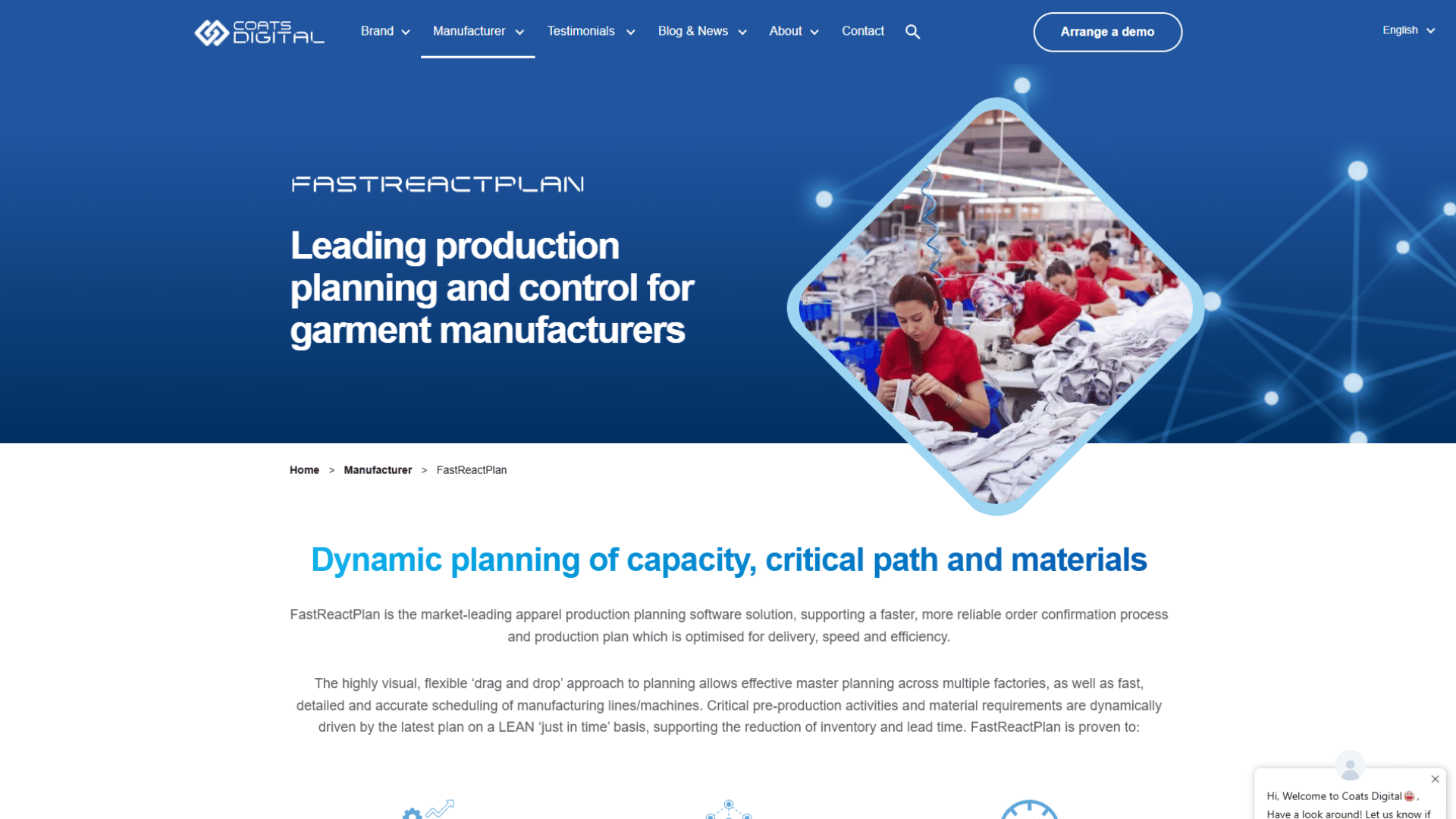
FastReactPlan is Coats Digital’s production planning and capacity scheduling platform, not a costing or SMV tool. It earns its place here because planning accuracy depends entirely on the quality of the SMV input. Fed with GSDCost-derived Bill of Labour data, it converts accurate SMVs into production scheduling, order confirmation and just-in-time material management. Typical benefits reported for the platform are a 3–10% productivity increase, a 10–30% improvement in on-time delivery and a 10–30% reduction in lead time.
Best for: Mid-to-large Indian factories that already hold accurate SMV data and need to turn it into optimised production plans.
Considerations: It does not calculate SMVs Without accurate inputs from a platform such as GSDCost, the planning output is only as reliable as the costing that feeds it.
India relevance: Madura Garments Exports (Aditya Birla Group), one of India’s largest shirt manufacturers and a supplier to Marks & Spencer, John Lewis and H&M, produced 34.5% more output with only 25.5% more machines and labour over two years using FastReactPlan, a 7.1% improvement in operational efficiency, while cutting delivery penalties from around $1.3 million to under $67,000.
How to Build an Accurate Garment Cost from a Tech Pack, Step by Step
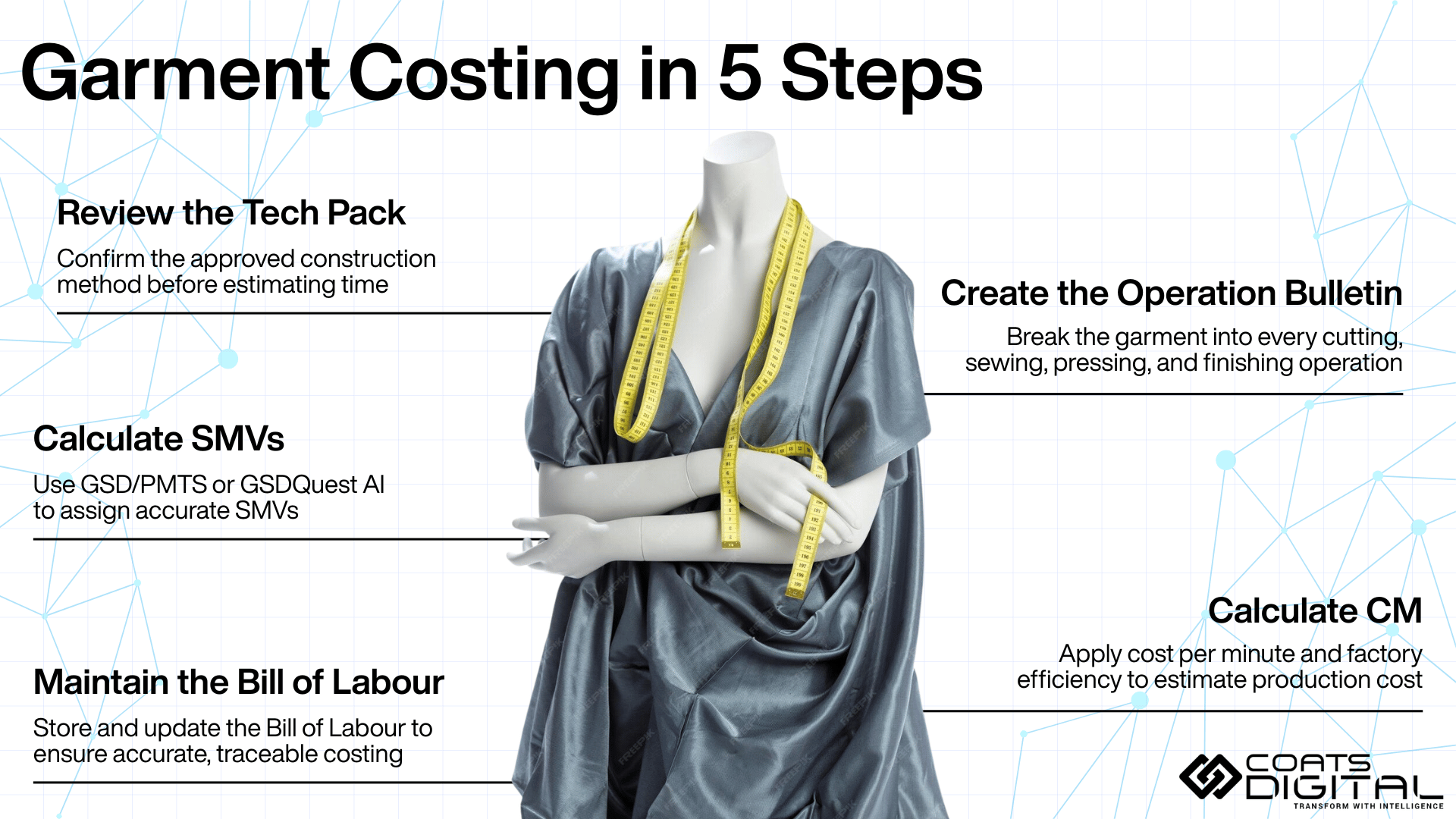
Step 1: Read the tech pack for construction intent, not just specifications
Before any SMV is assigned, the construction method has to be settled. Two factories handed the same tech pack may read a collar attachment differently, one choosing a single-needle operation, the other a two-pass construction, and the resulting SMVs will legitimately differ. The IE engineer’s first job is to determine the approved construction sequence for each operation. Method first, then time.
Step 2: Decompose the style into an operation bulletin
List every discrete operation, cutting, sewing, pressing and finishing, in production sequence. Each becomes one line in the Bill of Labour. A basic woven shirt may run to 30-40 operations; a complex woven jacket with multiple seam types and finishes can exceed 60. The operation bulletin is the input to the SMV calculation; without it, a cost is a single total-time guess rather than a traceable figure.
Step 3: Assign SMVs using GSD/PMTS, not stopwatch estimation
For each operation, apply the relevant GSD motion codes to derive an SMV. GSDCost’s 39 predetermined motion codes serve as building blocks, each carrying an internationally benchmarked time independent of any individual operator or factory floor. Where GSDQuest is in use, this step is automated: upload the product image, and the AI identifies the construction features and maps them to the QED Library to generate the Bill of Labour instantly, cutting costing time by around 90%.
Step 4: Apply factory cost per minute and efficiency
Once the total style SMV is fixed, calculate CM using the factory’s current cost per minute, then apply the efficiency factor to reach the effective cost per minute. A factory running at 55% efficiency is less cost-competitive than its nominal cost per minute suggests, and the effective figure is what decides whether the order is profitable at the buyer’s target price.
Formula: effective CM calculation:
Total Style SMV = sum of all operation SMVs; CM = Total Style SMV × Cost Per Minute. Effective CM = Total Style SMV × (Cost Per Minute ÷ Factory Efficiency %)
Example:
Style SMV = 18 minutes. Factory cost per minute = ₹0.90. Efficiency = 65%. Effective cost per minute = ₹0.90 ÷ 0.65 = ₹1.38. Effective CM = 18 × ₹1.38 = ₹24.92.
Step 5: Version-control the Bill of Labour as a factory asset
A Bill of Labour built once must be stored, versioned and updated when methods change. If the sample room revises the collar attachment after the initial costing, the Bill of Labour has to reflect it. Factories that keep these files in individual engineers’ spreadsheets lose the version history, so when a buyer challenges a quote from a previous season there is no auditable record to defend it. Centralised Bill of Labour management, within GSDCost or a governed shared system, is the governance minimum.
Worked scenario. An Indian woven-shirts manufacturer receives an RFQ from a European buyer for 12,000 units of a semi-formal shirt at a target FOB of USD 7.20, with a CM figure needed inside 48 hours. Using GSDQuest, the IE team uploads the buyer’s flat-lay image. The AI reads the construction: a seven-button placket, French seams, a fused collar with interlining, a double-needle sleeve cuff, and maps it to QED Library methods, generating a full Bill of Labour in seconds. Total SMV comes to 22.4 minutes. At the factory’s current cost per minute of ₹0.95 and 68% efficiency (effective cost per minute ₹1.40), CM works out to ₹31.35, roughly USD 0.38. Added to the fabric BOM and margin, the team can answer the buyer with a traceable, defensible cost built in minutes rather than hours.
Common Costing Errors in Indian Garment Factories: A Self-Diagnostic
Errors at the SMV Input Stage
Using total-style SMV estimates from experience rather than operation-level analysis. Experienced engineers often estimate a total SMV by comparing a new style to a similar past one and adjusting by feel. It produces a plausible number fast, but it cannot be decomposed, cannot be version-controlled and cannot be defended when a buyer’s team challenges it operation by operation. That is an approximation, not a cost.
Accepting historical SAM averages from the floor as costing inputs. Production-floor SAM figures capture how long operators currently take, including inefficiency, machine issues and learning curves. They look backwards. A costing SMV should reflect the standard time for a qualified operator at standard performance, not the average of what a current line produces on styles already in flow.
Applying one category’s SMV logic to another without method review. A team fluent in knit jersey may carry familiar assumptions into a new woven category. Machine types, seam constructions and allowances differ materially, and assumptions that hold for a T-shirt do not transfer to a woven trouser without full re-analysis.
Errors in Method and Process
Costing from a tech pack without first producing an operation bulletin. Without a defined operation sequence, SMV assignment becomes an exercise in filling blanks against a vague picture, and different engineers fill them differently. The operation bulletin is the mandatory precursor to any SMV assignment.
Not updating the Bill of Labour when the sample room revises the method. A buyer comment that changes a seam type or adds a step changes the SMV, and therefore the CM. Factories that cost from an initial tech pack and never revise the Bill of Labour are quoting prices built on an obsolete construction assumption.
Errors in Governance and Data Management
Holding SMV and Bill of Labour data in individual Excel files owned by individual engineers. This is the most common governance failure in Indian factories. With no single source of truth, new styles are costed inconsistently, past costs cannot be retrieved reliably for repeat orders, and when an engineer leaves, the institutional costing knowledge leaves too. Centralised, version-controlled Bill of Labour management is not a luxury; it is a baseline requirement for any factory running more than 20 active styles a season.
Consider a denim manufacturer that quotes a 12-style spring collection to a UK buyer. At season end, the buyer requests a cost breakdown after auditing a competitor’s quotes. The team finds that three of the 12 costs were built on SMVs from a stopwatch study run two seasons earlier on a different fabric weight, three were estimated by the IE manager from experience, and six used a hybrid. None can be traced back to a documented operation bulletin. The buyer moves the repeat business elsewhere. The lost order, not the software cost, is the real price of ungoverned costing.
Conclusion
Not every tool here does the same job, and treating them as interchangeable is how factories end up with the wrong system. GSDCost and GSDQuest are the only tools that offer both PMTS-grade SMV accuracy and an AI-assisted image-to-Bill-of-Labour workflow. The others serve specific contexts: Pro-SMV for India-supported IE work, SewEasy for Walmart-aligned lean programmes, timeSSD for budget-accessible PMTS entry, and WFX PLM for commercial cost management inside a PLM workflow.
The right costing software matches a factory’s IE maturity, its buyers’ requirements and its SKU volume, not simply the most feature-rich or best-known name. With India’s tariff position now favourable and buyers actively re-evaluating their sourcing, the factories that can turn a tech pack into a defensible CM quote in minutes are the ones positioned to take the orders.
To see how GSDCost and GSDQuest fit your factory’s scale and product categories, arrange a demo with the Coats Digital team.
Frequently Asked Questions
-
What is the best garment costing software for Indian factories in 2026?
For PMTS-grade SMV accuracy, GSDCost. For AI-driven image-to-Bill-of-Labour speed, GSDQuest. For an India-developed and India-supported option, Pro-SMV. For a budget-accessible entry point, timeSSD’s pay-as-you-go model. The best choice depends on your IE maturity, your buyers’ benchmarks and your SKU volume.
-
What is the difference between PMTS software and PLM costing software?
PMTS software derives SMVs from motion analysis, giving you a defensible labour time for each operation. PLM costing software manages the commercial cost data that sits on top of those SMVs A PLM module such as WFX does not generate SMVs from a tech pack; it consolidates, compares and approves costs.
-
Can AI software generate garment costs from a product image?
Yes. GSDQuest (Coats Digital, launched August 2025) generates a standardised Bill of Labour from an image using PMTS-grade methods, and MannyAI’s Seamstream (beta, July 2025) produces an AI-native first-pass estimate. The distinction matters: GSDQuest is PMTS-integrated and buyer-defensible, while Seamstream is a first-pass estimator.
-
What is the difference between SMV and SAM?
They are the same measure under different naming conventions. SMV (Standard Minute Value) is used in PMTS systems and in Europe and the UK; SAM (Standard Allowed Minutes) is common on the production floor and in South Asian IE practice. The formula is identical. What matters more than the label is how the figure was derived, from a motion standard or from a stopwatch estimate.
-
Is GSDCost available for garment factories in India?
Yes. Coats Digital operates in India from Bangalore, and its solutions run in more than 3,000 factories worldwide. Within India, Madura Garments Exports (Aditya Birla Group) uses the same Coats Digital suite. For a GSDCost reference specific to your product category, contact Coats Digital.
-
What is a Bill of Labour and why does it matter for costing?
A Bill of Labour is the operation-level breakdown of every sewing, cutting and finishing step, each with a pre-assigned SMV. Where a Bill of Materials covers fabric and trims, a Bill of Labour covers the labour content. It is the foundation of a defensible CM cost, because it lets you show a buyer exactly how the figure was built.
-
How much does garment costing software cost in India?
Pricing varies by tool and model. GSDCost and GSDQuest are quoted on request from Coats Digital. timeSSD uses pay-as-you-go SaaS pricing. WFX PLM is priced on an enterprise basis. Confirm current figures directly with each vendor rather than relying on third-party estimates.
-
Can a small garment factory in India use costing software?
Yes. timeSSD’s pay-as-you-go pricing removes the upfront barrier, and Pro-SMV offers India-based support. Structured Excel with GSD-trained inputs is the zero-cost starting point. The practical inflexion point for dedicated software is around 30 or more active styles, or four or more categories.
-
How does factory efficiency affect garment costing?
Effective cost per minute equals quoted cost per minute divided by factory efficiency. A factory at 60% efficiency effectively pays about 67% more per garment minute than one at 100%, with no change in wages. Always cost with a realistic efficiency figure, not an aspirational one.
-
What is the difference between GSDCost and GSDQuest?
GSDCost is the full PMTS platform: practitioner-led SMV analysis, a Methods Database, Bill of Labour governance and a fair-wage tool. GSDQuest is an AI add-on that automates the initial Bill of Labour construction from a product image. GSDQuest requires a GSDCost licence and cannot run standalone.

How Bangladesh Knitwear Factories Improve Operator Efficiency Across Sewing, Linking and Finishing

Best Lean Manufacturing Software for the Indian Garment Industry

Brand-to-Vendor Cost Collaboration: Which Layer of the Cost Stack Are You Missing?
All Blog Categories
- Production Planning
- Supply Chain Solutions
- Corporate
- Method Time Cost Optimisation
- Sustainability
- Videos